Dental Assistant vs Dental Hygienist
Dental assistant vs dental hygienist: compare training, daily work, scope, and career fit before you choose a Georgia path.

By Dr. Brian Bain, Owner
A dental assistant vs dental hygienist choice is really a choice about time, daily work, and how soon you want to be in a dental office. Assistants support the dentist during treatment. Hygienists provide licensed preventive care directly to patients. Both jobs matter, but they are not the same job, and Georgia does not treat them the same.
Talk with admissions about the in-person program
Dental Assistant vs Dental Hygienist at a Glance
The two jobs split in five practical ways, and the rest of this post explains each one. An assistant supports the dentist and keeps the visit moving, while a hygienist provides preventive care and teaches patients. Assistant training is often a postsecondary nondegree award, while hygiene typically starts with an associate degree of about three years. Georgia does not issue a general dental assistant license, but every state licenses hygienists under its own rules. The Bureau of Labor Statistics publishes a national median wage and a ten-year outlook for each occupation. Use the May 2025 figures on the linked BLS pages, not a number from this school. Alliance Dental Institute does not publish graduate wages, and a national median is not a promise of what you will earn.
| Question | Dental assistant | Dental hygienist |
|---|---|---|
| Main job. | Chairside support. | Preventive care. |
| Typical first education. | Nondegree award. | Associate degree. |
| State credential. | No general license. | License required. |
| Where to check pay. | BLS assistant profile. | BLS hygienist profile. |
| Outlook, 2025 to 2035. | 7 percent. | 8 percent. |
Sources: BLS dental assistants and BLS dental hygienists. Local wages can differ. Ask an employer in your area before you plan a budget around either number.
What Each Person Does in the Operatory
The clearest way to tell the roles apart is to watch one patient visit. The assistant is usually beside the dentist, while the hygienist is usually with the patient for a cleaning and a look at the gums.
Chairside support
The Bureau of Labor Statistics says dental assistants prepare patients and the room. They sterilize instruments, pass instruments, and use suction. They also keep records and schedule visits. They may take x-rays when state rules and the dentist allow it. The task list changes from office to office.
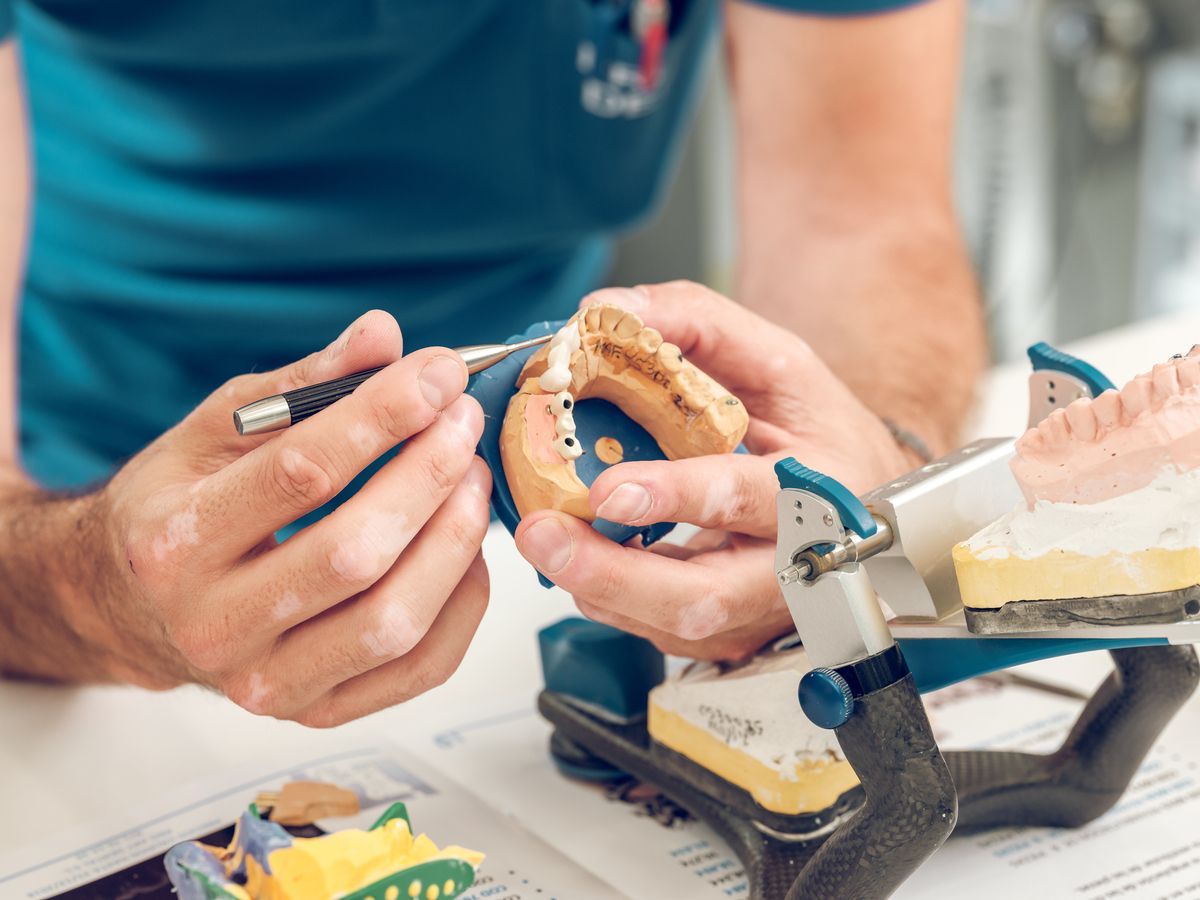
Picture a filling visit. The assistant seats the patient and reviews why the patient came in. The instruments go out in the order the dentist uses them. During the procedure, the assistant keeps the area dry and passes the next instrument. The assistant also watches the patient's comfort. Afterward, the assistant notes what was done. Home-care directions come from the dentist. Then the room is turned over for the next person.
That mix is why the job feels fast, and one hour can be a cleaning setup. The next can be a crown, a filling, or an emergency visit. You are not running your own column of patients, because you are making the dentist's column run smoothly.
At Alliance Dental Institute in Villa Rica, students practice that chairside work in person. The curriculum overview covers suction, instrument transfer, and sterilization. It also covers digital radiography on a practice mannequin. Students practice impressions, temporary crowns, and charting in Dentrix and Eaglesoft. They also practice medical emergencies and earn CPR from a qualified instructor. That is training, not a license to perform every task on day one.
Preventive care
Dental hygienists examine patients for signs of oral disease and provide preventive care. Typical duties include removing tartar and plaque. They also apply sealants and fluoride, take x-rays, and document findings. They teach patients how to brush and floss. They use hand, power, and ultrasonic tools. They report findings to the dentist. The dentist makes the diagnosis and the treatment plan.
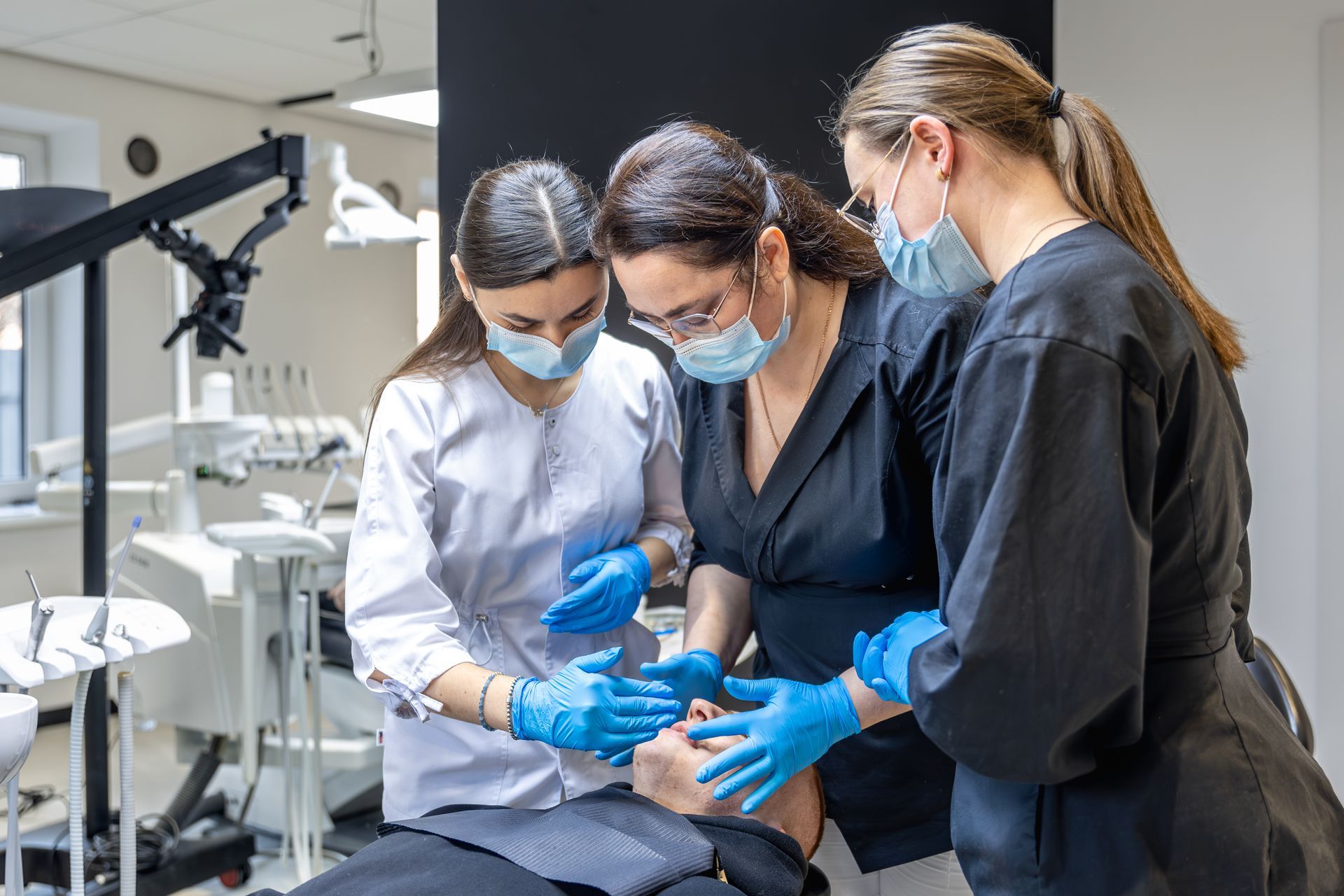
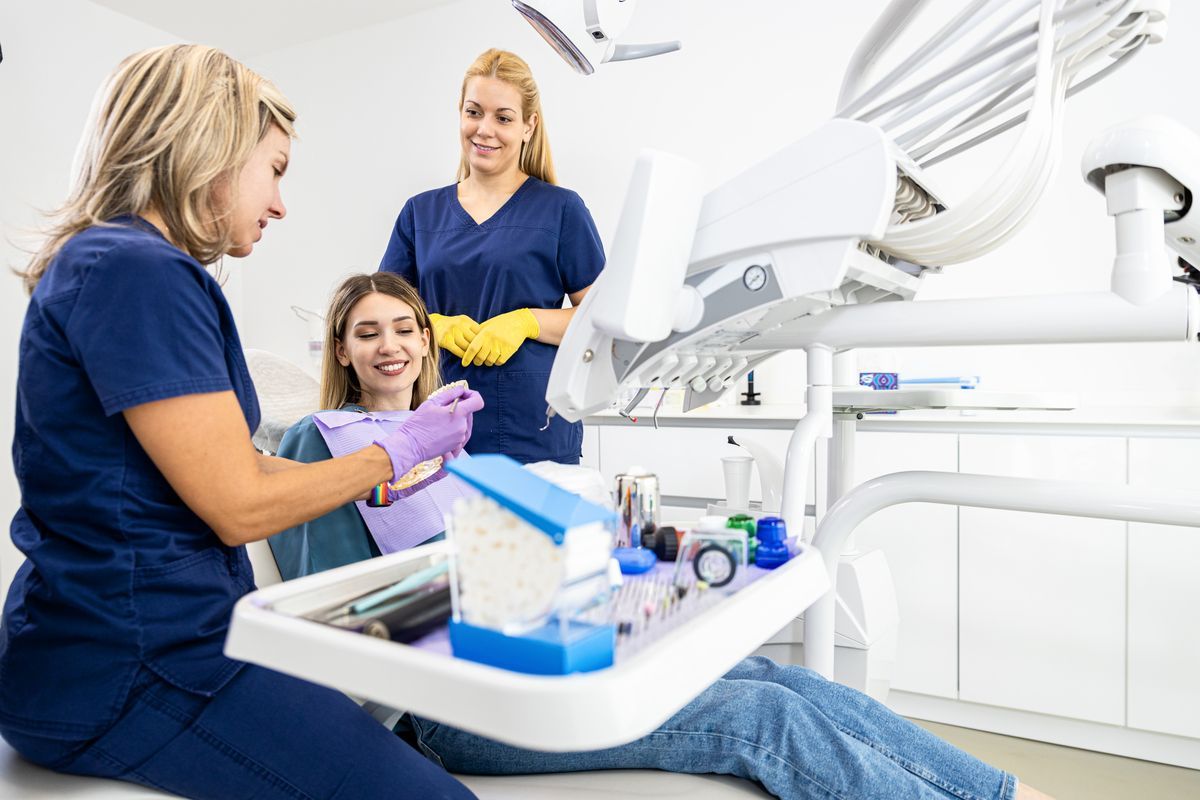
A hygiene visit has a different rhythm. The hygienist often stays with one patient for most of the appointment. The talk covers home care, gum health, and what the dentist should see next. There is still teamwork, and the dentist comes in for the exam. An assistant may help with records, x-rays, or room turnover. The hygienist is not the dentist's extra set of hands for the filling or the crown.
If you like teaching and a repeatable visit, hygiene may feel like a better fit. If you like changing procedures and working in the dentist's flow, assisting may feel better. Neither preference makes you more serious about dentistry.
If you want an assistant's day without the hygiene comparison, read what a dental assistant does day to day.
Training Time and Georgia Rules
This is the split that decides the choice for many career changers. Hygiene is a degree path, while assisting in Georgia is a shorter training path with duty-specific rules. Time is not the only difference, because the credential at the end is different too.
The hygiene path
BLS says dental hygienists typically need an associate degree in dental hygiene. Programs usually take about three years. Some people later earn a bachelor's degree. The typical entry point BLS names is still the associate degree. Every state requires a license, and the exams and renewal rules vary. Continuing education is part of keeping that license.
Plan for science classes, clinic time, and a school that can prepare you for licensure. That is a different commitment from a short career course. If you are working, parenting, or changing fields, three years of school may or may not fit. Alliance Dental Institute does not offer a dental hygiene degree. The Villa Rica course is not that path.
The assisting path
BLS lists a postsecondary nondegree award as the typical entry education for dental assistants. Some states want an accredited program and an exam. Others allow on-the-job learning. Do not assume one state's rule applies in Georgia. A certificate from another state is not automatically a Georgia credential.
Alliance's published program is a 12-week, fully in-person course at 427 W Bankhead Hwy, Villa Rica, GA 30180. It is a training program, not a degree. Students also complete a 40-hour externship in dental offices. They work with actual patients during that training. The Students page lists 2027 course dates of January 9, April 9, July 9, and October 8. Confirm with admissions whether a listed date is the date your cohort begins, and confirm class times before you plan around one.
About also mentions 10-week sessions. A separate 10-week calendar and price are not published as a current offer. Do not enroll on the assumption that a shorter cohort is open. Ask admissions which session is actually available.
Georgia does not issue a general dental assistant license. Rule 150-9-.01 covers general duties under a dentist's direct supervision. The dentist must be present, must authorize the work, and must evaluate it. Rule 150-9-.02 covers expanded duties. It requires a high school diploma or equivalent, current CPR, and a certificate for the specific duties in the rule. Radiography has its own prerequisite. Finishing a course does not by itself authorize every expanded function.
Read the current text on the Georgia Board of Dentistry rules page before you rely on a marketing label. A school award for radiology, CPR, or expanded functions is not the same document. None of those awards is a state license.
Pay, Schedule, and What the Numbers Do Not Say
National pay is higher for hygienists, and the education is longer. Open the two BLS profiles linked above and read the May 2025 median wage on each page. A median means half of workers earned more and half earned less. It is not a starting wage, and it is not a Georgia wage. This article leaves the dollar amounts on the government pages so they are not mistaken for a school price.
The same BLS pages list job outlook from 2025 to 2035. Both occupations are described as growing much faster than the average for all occupations. Each page also lists projected yearly openings. Many of those openings replace people who leave. They are not all brand-new jobs. None of this is a hiring promise in Villa Rica or anywhere else in Georgia.
Work patterns differ too. BLS says most dental assistants work full time. Almost all of them work in dentists' offices. Many hygienists work part time, and nearly all of them also work in dentists' offices. Part time can mean more than one office. It can also mean fewer days per week. It does not mean every hygienist job is part time, and it does not mean every assistant job is a standard weekday.
Hours matter as much as the median. A full-time assistant offer and a part-time hygiene offer are hard to compare on annual pay alone. Benefits, commute, and how many days you can work will change the math. Ask the office for the weekly schedule before you treat a national median as your budget.
Do not treat either median as your future paycheck. Experience, the office, and benefits all change the offer. Alliance does not publish graduate wages, and one student story is not a placement rate. A financing option, when a school offers one, is not proof that you will finish without debt.
Which Path Fits Your Time and Goals
Pick the path that matches the life you have now, not the job title that sounds higher.
Assisting can be a first step into a dental office. It is not a shortcut into a hygiene license. If hygiene is the goal, plan for the degree and the license from the start. If you want to be in the operatory sooner, a focused assistant program is the more direct route.
A few practical checks help. Can you attend class in Villa Rica in person? Do you want to change jobs within months, or can you stay in school for about three years? Do you like moving between the dentist, the patient, and the front office? Or do you want a longer visit that centers on cleaning and coaching? Your answers matter more than which title sounds more advanced.
People also mix up the jobs because both happen in the same small room. A patient may thank the hygienist for the cleaning and thank the assistant for explaining the next visit. Both conversations are real patient care. Only one of them is a licensed preventive visit. Knowing that difference keeps you from enrolling in the wrong school.
Cost belongs in the decision, but this post will not quote an all-in tuition. Published figures on the school site do not all describe the same fee. The homepage lists $275 to reserve a 2027 seat. That amount is a reservation, not proof of the full program price. Ask admissions for the current total, what the reservation covers, and how payment plans work. Compare that answer with the cost of a hygiene degree before you decide.
For a plain look at assistant training time, see how long it takes to become a dental assistant. For the Villa Rica course itself, start with the student resources page.
Call (470) 801-4234 during admissions hours, Monday through Friday, 9 a.m. to 5 p.m. Tours run Monday through Thursday, 8:30 a.m. to 4:30 p.m., and Friday by appointment. Those hours are for admissions and tours, not class times.
Frequently Asked Questions
Is a dental assistant higher than a hygienist?
No, they are different jobs, not ranks on one ladder. Hygienists are licensed clinicians who provide preventive care. Assistants support the dentist and the visit. One is not a promotion of the other.
Which pays better, a dental assistant or a dental hygienist?
Nationally, hygienists earn more. Check the current median on each BLS profile rather than a figure repeated here. Your offer can be higher or lower than the national median. Alliance does not promise a wage.
Is it harder to be a dental assistant or a dental hygienist?
Hygiene takes longer to enter. BLS says the typical path is an associate degree of about three years, plus a state license. Assistant training is often a shorter nondegree program. Georgia rules then limit which duties you may perform. Harder depends on whether you mean school time or the pace of the workday.
Can a Georgia dental assistant become a hygienist later?
Yes, but assisting school does not replace hygiene school. You would still need a dental hygiene degree and a state license. Chairside experience can help you decide if you want that longer path. Chairside time does not waive that requirement.
Does Alliance Dental Institute train hygienists?
No, the school trains dental assistants in a 12-week in-person program in Villa Rica, with a 40-hour externship. It does not offer a hygiene degree or a hygiene license.