Dental Assistant Orthodontic Certification: What to Know
Learn what orthodontic assistants may do, whether a certificate is required, and how to compare training with state rules and employer expectations.

If you are researching dental assistant orthodontic certification, start by separating three questions: what the job involves, what training teaches, and what credential or qualification a particular task requires. An orthodontic office may prefer experience or a course certificate, but that does not mean every assistant needs a credential with that exact title. State rules depend on the task and location, while employers set their own hiring preferences.
Call admissions to ask about dental-assisting training
What does an orthodontic dental assistant do?
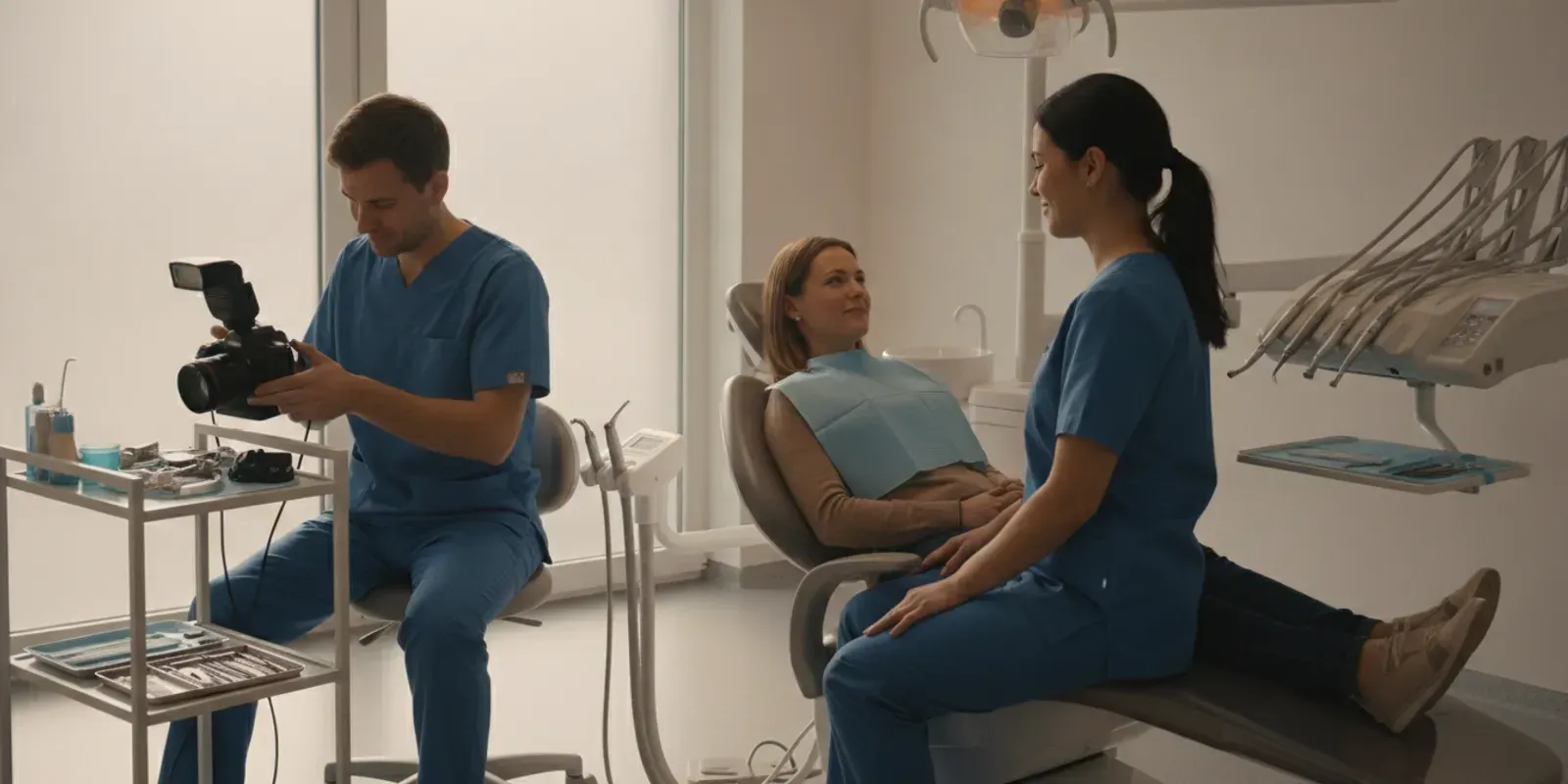
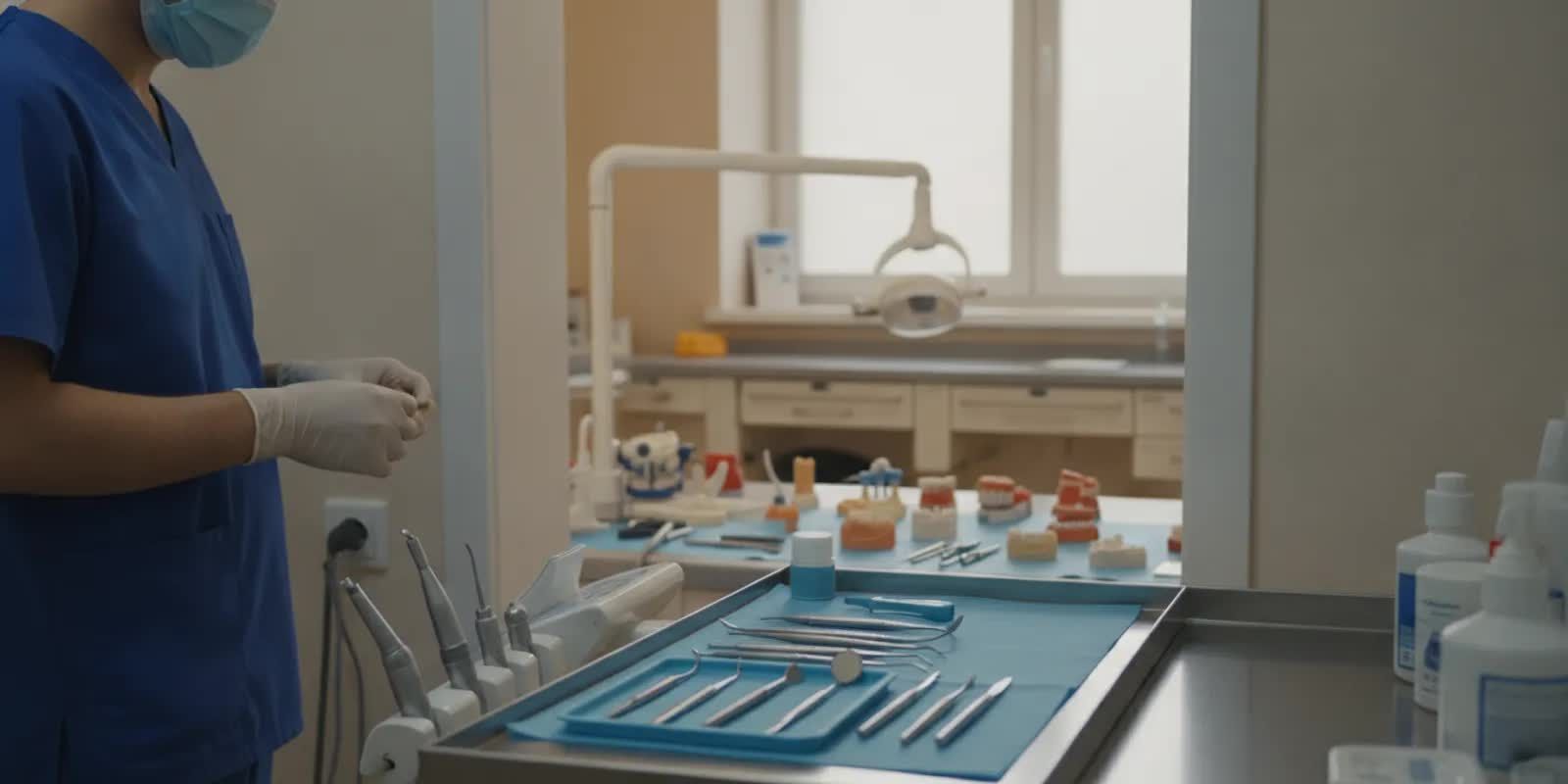
Orthodontic assistants support the dentist or orthodontist and the rest of the clinical team. Duties vary by office, the assistant’s preparation, and the rules that apply where the office operates. A position may involve preparing a treatment area, arranging instruments and materials, assisting the clinician during permitted procedures, organizing records as directed, and helping appointments move in an orderly way.
Orthodontic care often includes visits to place or adjust appliances and monitor treatment. An assistant may prepare the room and supplies, follow the office’s infection-prevention procedures, and relay routine instructions approved by the clinician. The dentist or orthodontist makes diagnosis and treatment decisions. An assistant should direct clinical questions to that clinician rather than independently assessing a patient or changing care instructions.
Examples of support work may include:
- Setting up and turning over the treatment area according to office procedures.
- Preparing instruments and materials requested by the clinician.
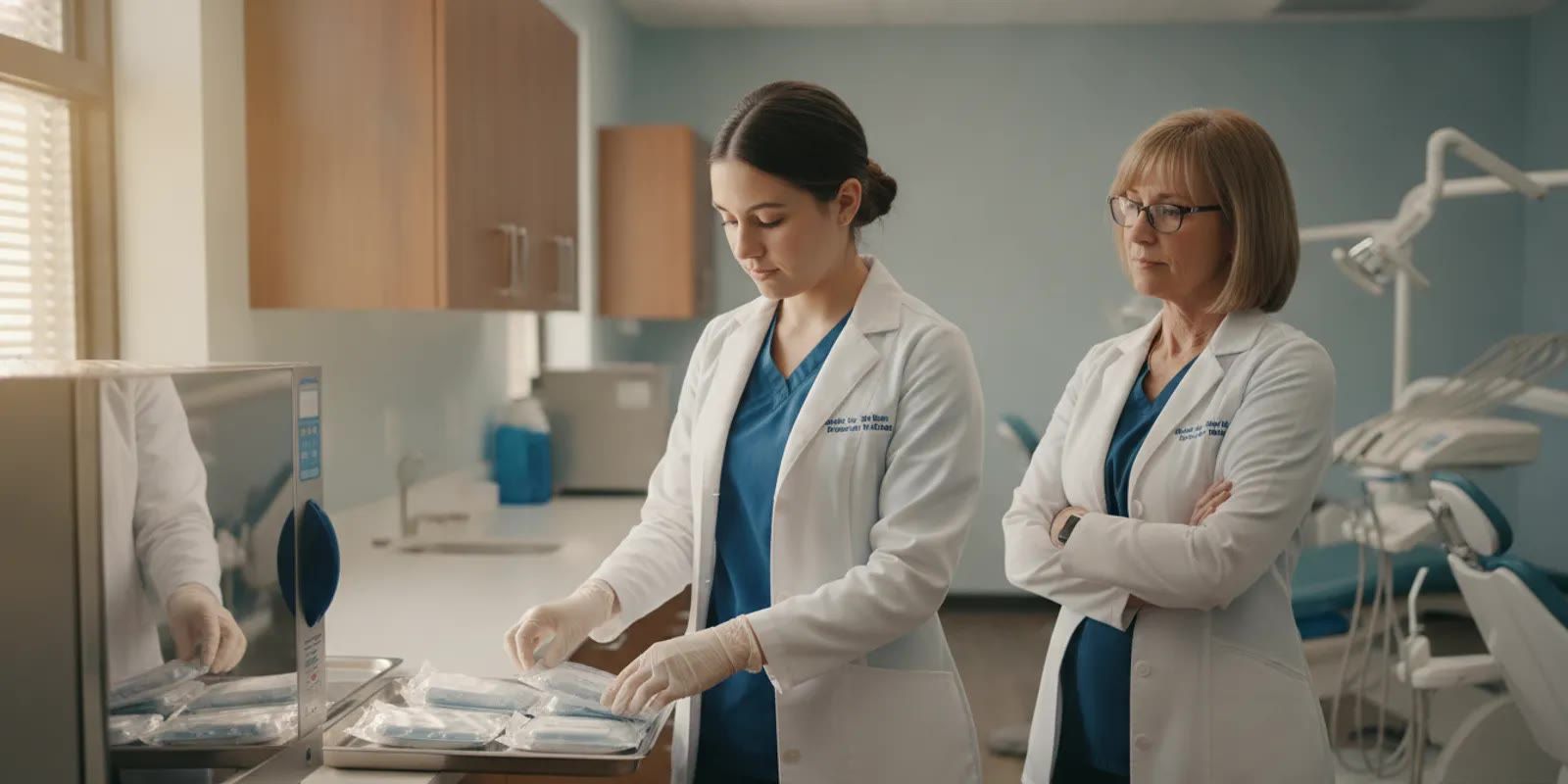
- Following the practice’s instrument-processing and infection-prevention steps.
- Providing chairside support within the assistant’s training and permitted duties.
- Entering or organizing information as directed, without substituting for clinical judgment.
- Communicating respectfully with patients and caregivers and referring care questions to the clinician.
These are examples, not a universal job description. One practice may hire an entry-level assistant and provide task-specific instruction. Another may seek someone with prior dental-office experience. Read the actual posting and ask what its listed duties mean before assuming a particular certificate is necessary.
What does orthodontic assistant certification mean?
The phrase “orthodontic certification” can refer to more than one thing. It may describe a certificate for completing a course, a professional credential from an organization with its own eligibility or examination requirements, or a qualification an employer prefers. These categories are not interchangeable and do not automatically carry the same legal meaning.
A course-completion certificate records that a student met the training provider’s stated requirements. It can document coursework, but it does not automatically authorize every clinical task. A professional credential has an issuer and its own requirements. An employer preference reflects a hiring decision; it is not necessarily a state mandate.
Before enrolling in a course advertised as “certification,” ask for the exact award name, the organization that issues it, any prerequisites, and how completion is assessed. If someone says it satisfies a legal requirement, ask which state rule and specific duty that claim concerns. Then confirm the requirement with the appropriate state authority. A course title alone cannot answer those questions.
Alliance Dental Institute describes a dentist-mentored dental-assistant training program. The information available here does not establish that the school awards a separate orthodontic certification. Ask admissions to confirm the current curriculum and exact award rather than assuming general dental-assisting training is a specialty credential.
Is a certificate required to work in an orthodontic office?
There is no single answer for every state, employer, and duty. Some job postings may list a credential as required; others may call it preferred or say the employer is willing to train. State rules can set qualifications for particular functions without requiring a credential called “orthodontic assistant certification” for every person employed in an orthodontic office.
For a Georgia job, check current rules against the actual task. Georgia Rule 150-9-.01 addresses dental radiography. Rule 150-9-.02 addresses expanded duties and conditions that include a high-school diploma or equivalent, current CPR, and a certificate for specific listed duties. These requirements should not be read as a general dental-assistant license, or as proof that one certificate covers every expanded function. Start with the Georgia Board of Dentistry website and confirm current requirements with the state authority.
When reading an advertisement, label each credential “required,” “preferred,” or “unclear.” Then identify the specific duties. A radiography requirement should be checked against the radiography rule, not inferred from the words “orthodontic assistant.” If a posting asks for an expanded-duty qualification, ask which listed duty and credential it means. This simple distinction can keep a job title from being mistaken for a legal category.
Rules and employer requirements can change. Do not rely only on an old course description, a social media post, or another person’s experience. Use current state guidance for scope-of-practice questions and ask the hiring employer about its own expectations. Those are related questions, but they are not interchangeable.
Which foundational skills can help in an orthodontic office?
Orthodontic work builds on basic dental-assisting habits. Careful setup supports an organized appointment. Consistent infection-prevention practices matter in any clinical setting. Accurate records and clear communication help the team follow its workflow and respond appropriately to patient questions.
Foundational training may cover subjects such as:
- Chairside assisting: preparing instruments and supporting the clinician within the assistant’s role and permitted duties.
- Infection prevention and sterilization: learning safe handling and processing steps and following workplace procedures.
- Dental anatomy and terminology: becoming familiar with oral structures and the language used by a dental team.
- Radiography fundamentals: understanding radiation protection and checking applicable prerequisites before performing a regulated imaging task.
- Charting and records: entering information accurately and following the office’s documentation process.
- Patient communication: listening, using clear and respectful language, and referring clinical questions to the dentist or orthodontist.
- Teamwork and organization: coordinating with colleagues, preparing for appointments, and keeping supplies orderly.
Some offices teach appliance-specific procedures and their own workflow after hiring. General dental-assisting training may provide useful foundations without being a specialty orthodontic award. Ask a school what topics it covers, what supervised practice it includes, and what certificate or other award a student receives. Do not assume that coverage of a subject by itself authorizes a student to perform a regulated task.
How should you compare training options?
Compare the details behind a program title rather than relying on the word “certification.” A useful conversation with a school should clarify curriculum, learning format, practice opportunities, the award, and whether the training matches a particular job or legal requirement. Request written details when they affect your enrollment decision.
Curriculum and supervised practice
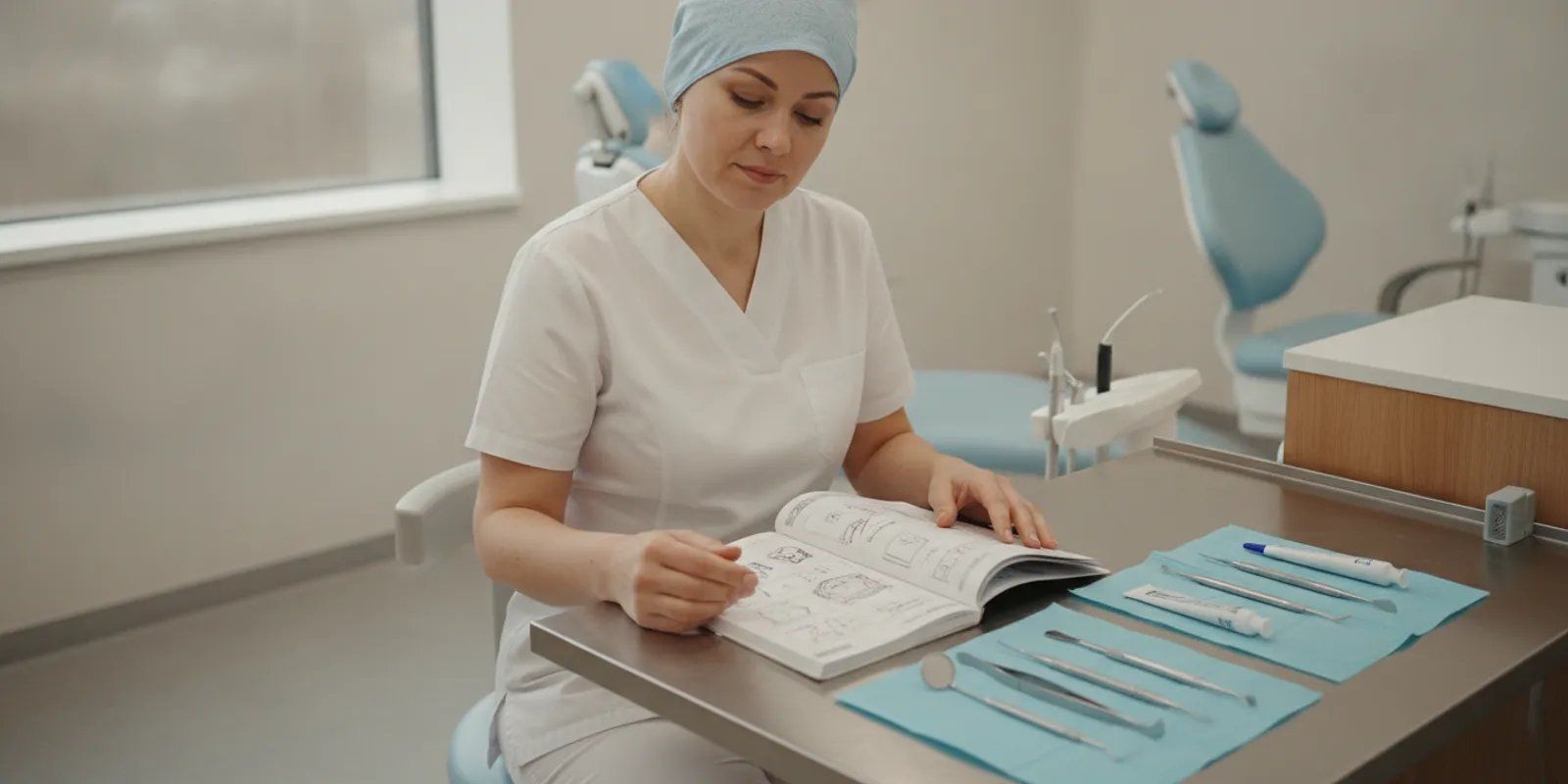
Ask whether instruction covers chairside support, sterilization, charting, terminology, safety, and communication. Find out what practical activities are included, who supervises them, and how they relate to your intended role. A topic in a course outline is not the same as permission to perform a task independently.
Credential and eligibility
Get the award’s exact name, issuer, prerequisites, and assessment method. If the program says an award meets a state requirement, ask which rule and duty it means and verify the statement with the state authority. The school can explain its program; the regulator is the source for current legal requirements.
Format, schedule, and cost
Confirm whether instruction is in person, where it takes place, and the actual class schedule. Admissions hours and tour hours are not class hours. Ask for current itemized tuition, fees, payment terms, and refund policies. Do not assume a seat-reservation payment is the full cost. For more questions to use when evaluating fees, see this guide to dental assistant program cost.
Alliance Dental Institute describes its primary program as a 12-week, in-person course in Villa Rica, Georgia, with classroom instruction, practical learning, and a stated 40-hour externship. Published topics include chairside assisting, radiography, sterilization, charting, dental materials, emergency response, and career preparation. Confirm the current schedule, curriculum, externship details, and exact award with admissions. Do not assume the program is a separate orthodontic certification.
For any radiography component, ask what the course teaches and what the state requires before an assistant performs the task. You can read more about the distinction in this overview of dental radiography certification in Georgia. Use that information as a starting point, then confirm current requirements with the state authority.
How can you verify a Georgia requirement?
A short, duty-focused process can help separate a job preference from a legal requirement:
- Write down the exact duty. Replace broad labels such as “orthodontic work” with the specific task named in the posting.
- Identify the credential. Record its full title, issuer, and stated prerequisites. If the posting is vague, ask the hiring contact to clarify.
- Check the current rule. Consult the relevant Georgia rule and state guidance for a regulated duty. Do not assume a course certificate covers tasks outside its scope.
- Compare the program documents. Review the course outline, award description, assessment, and supervised practice against the duty and requirement.
- Keep answers in writing. Save the employer’s clarification and the program’s description. Reconfirm time-sensitive rules before acting.
For example, imagine a posting that asks for radiography qualification and orthodontic experience. Treat them as two separate questions. Find out what radiography preparation the state requires, then ask the employer what experience it expects and whether it trains new hires in its workflow. General assisting coursework may help you build foundations, but do not represent it as satisfying a distinct qualification unless that has been verified.
If you are uncertain whether a rule applies to a task, describe the task precisely when contacting the state authority. “Can assistants work in orthodontics?” is broad. “What qualifications and supervision apply to this specific radiography or expanded duty?” is more likely to produce a useful answer. Keep the source and date of the guidance so you can revisit it if rules change.
What should you ask an orthodontic employer?
Ask direct questions before paying for a course because of a job advertisement. Find out which duties the position includes, who performs them, and what supervision applies. Clarify whether the employer expects prior orthodontic experience, accepts general dental-assisting preparation, or provides instruction after hiring.
- Which credentials are mandatory for this job, and which are preferred?
- What exact credential title and issuer do you accept?
- Does a requirement apply to every assistant or only staff assigned particular duties?
- Which duties will a new employee perform, and what training or supervision is provided?
- Are CPR or other qualifications required, and when must they be current?
- Would you review a course outline before I enroll to see whether it addresses your hiring preference?
If an employer says a credential is required by law, ask which rule and duty it relates to, then verify the answer independently. If it is an office preference, ask what experience or skill would demonstrate readiness. Clear answers let you compare training without treating every certificate as interchangeable.
How can you decide what preparation fits your goal?
Start with the setting you are considering and work backward from its needs. If you have not chosen an employer, review several local postings and note repeated qualifications, while remembering that a posting is not a statewide rule. Separate practical skills such as recordkeeping and instrument setup from legal prerequisites tied to a particular task. That gives you a more useful checklist than searching for a certificate based only on a job title.
It can help to distinguish what each type of preparation establishes:
- Course completion: documents completion of a provider’s stated course requirements. Ask for the syllabus, assessment method, and exact award.
- Professional credential: may involve an independent issuer and eligibility or testing requirements. Confirm current requirements with that issuer and the employer.
- Employer training: may explain the office’s instruments, patient flow, and procedures, but does not replace a state qualification that applies to a regulated duty.
- State qualification: relates to requirements for a specific task in a jurisdiction. Check the rule and confirm that your documentation meets it.
These categories can overlap, but one does not automatically substitute for another. A general course may help you understand dental terminology and chairside routines, while an employer still teaches its own workflow. A separate state rule may apply if your assigned duties include a regulated function. Ask the school and employer precise questions, and check the rule before relying on an answer.
Consider whether the format fits your circumstances as well as whether the topics match your goal. For an in-person program, confirm the campus location, class schedule, attendance expectations, and where practical learning or an externship takes place. Ask what the stated externship hours involve and whether details are confirmed before enrollment. Do not assume a published course duration gives you the daily timetable or that an externship guarantees a job. Specific written information is more useful than a broad promise about career outcomes.
When comparing program costs, ask for a current itemized explanation of tuition, fees, and any seat-reservation payment. Confirm what each amount covers and whether any conditions apply. Do not infer current all-in tuition from an old webpage, an undated figure, or a payment option. Ask admissions to provide terms for the particular program and cohort you are considering.
Frequently asked questions
Is orthodontic assistant certification the same as dental assistant certification?
Not necessarily. The terms may refer to different course certificates, professional credentials, or employer preferences. Check the award’s exact name, issuer, requirements, and purpose.
Can general dental-assistant training help prepare me for orthodontic work?
It can build foundations such as chairside support, sterilization, charting, and communication. An employer may still expect orthodontic experience or provide additional training for its own workflow.
Does a course certificate authorize every clinical task?
No. A certificate does not automatically authorize every task. The duty, applicable state rules, qualifications, and supervision determine what an assistant may do.
Should I enroll before finding a job?
Review job postings in the area where you plan to work and note what is required versus preferred. Verify any legal requirement, then compare program details with those needs. This can help you avoid paying for training that does not match your intended role.
Call Alliance Dental Institute admissions with your questions
Alliance Dental Institute can answer questions about its current dental-assisting training program, curriculum, and awards; contact admissions directly to confirm details before applying.