Dental Assistant Laboratory Technician Career Paths
Compare dental assisting and dental laboratory work, including patient contact, materials, digital workflows, training questions, and how to choose a path.
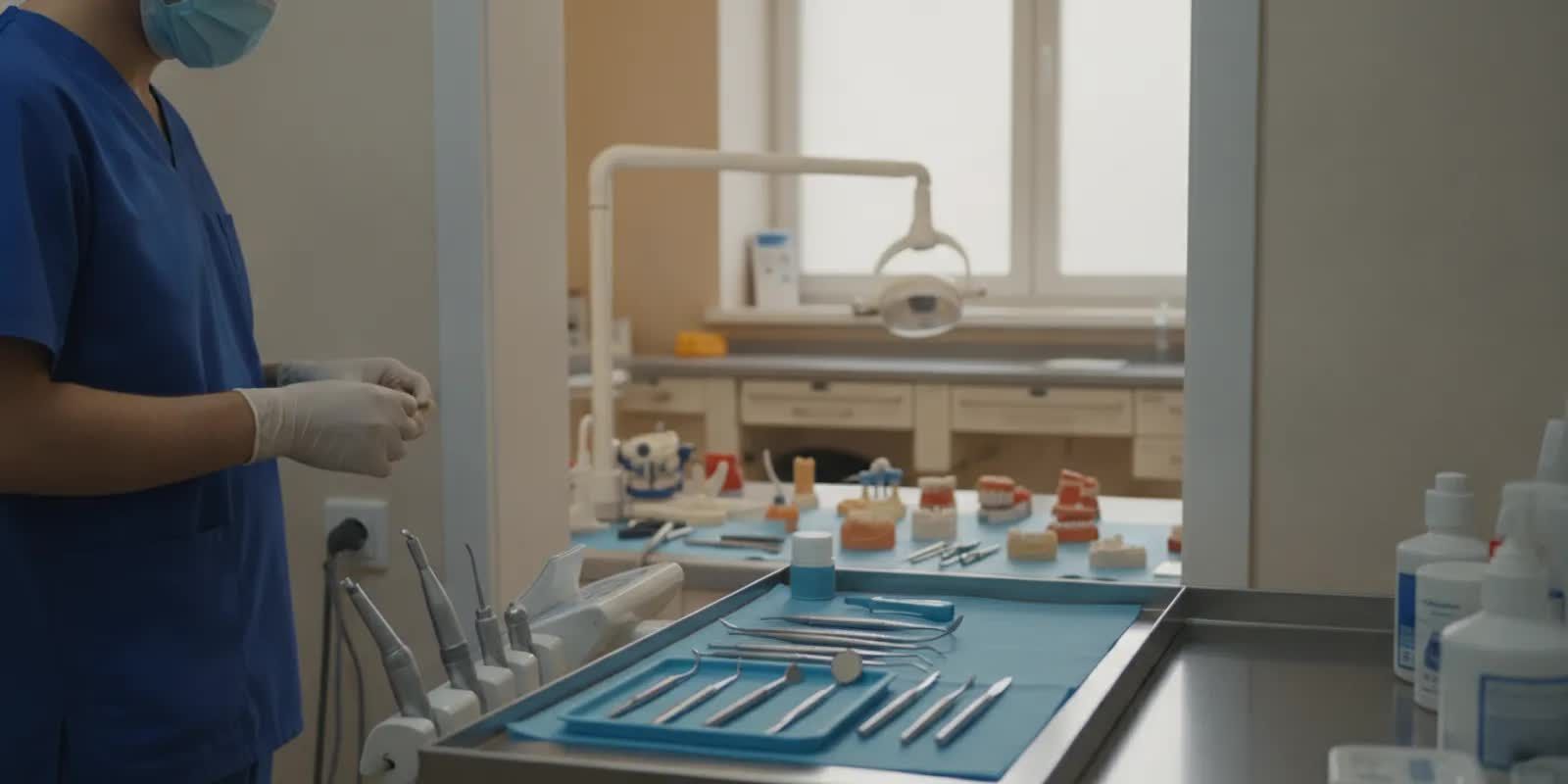
Choosing a dental assistant laboratory technician career means comparing two roles that support oral health in different ways. Dental assistants work directly with patients and the clinical team. Dental laboratory technicians usually make or repair restorations and appliances away from the chair. Both paths can involve careful hands-on work and digital tools, but the daily setting, training route, and kind of patient contact differ.
Call to discuss dental assistant training
What does a dental assistant do?
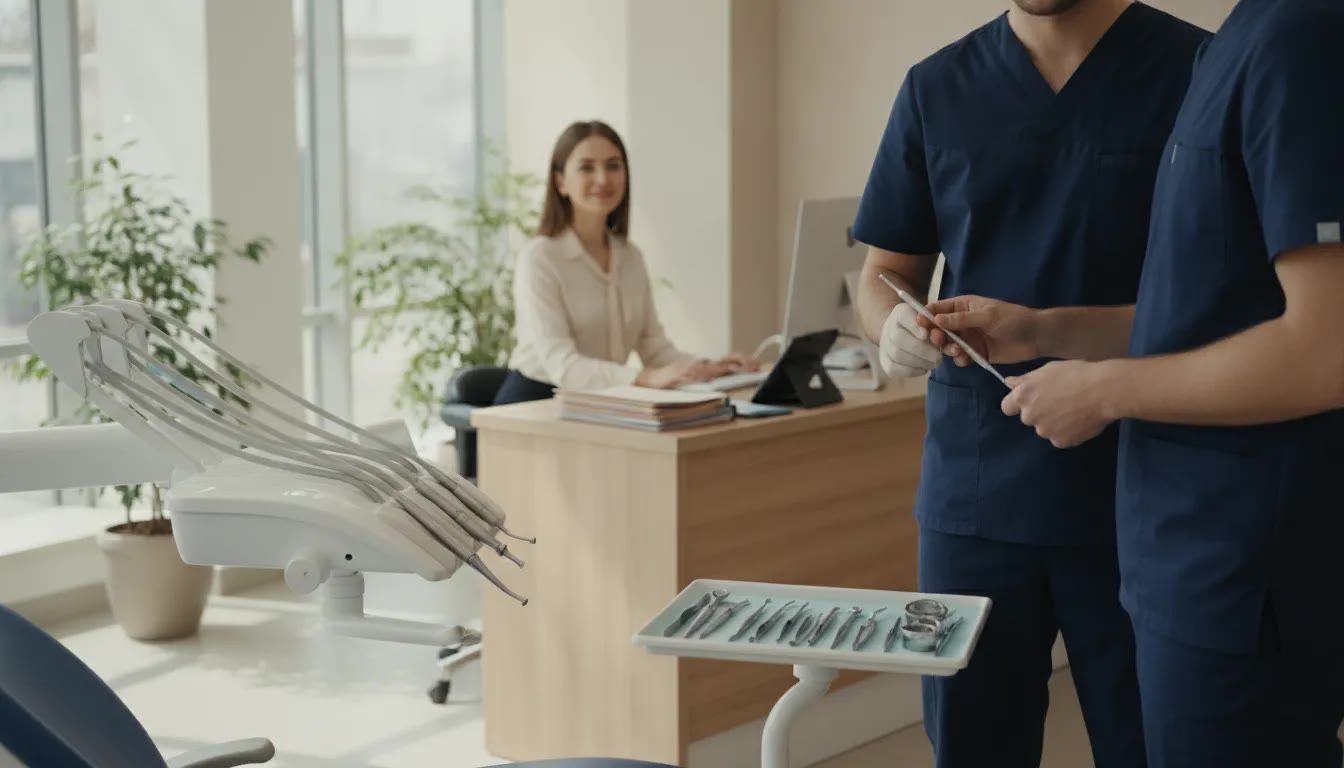
A dental assistant helps a dentist deliver care during appointments and supports the smooth running of a dental office. The exact duties depend on the employer, the assistantâs training, and applicable state rules. The work is patient-facing: assistants may welcome and prepare patients, set up instruments, support chairside procedures, keep records, and help maintain a clean clinical area.
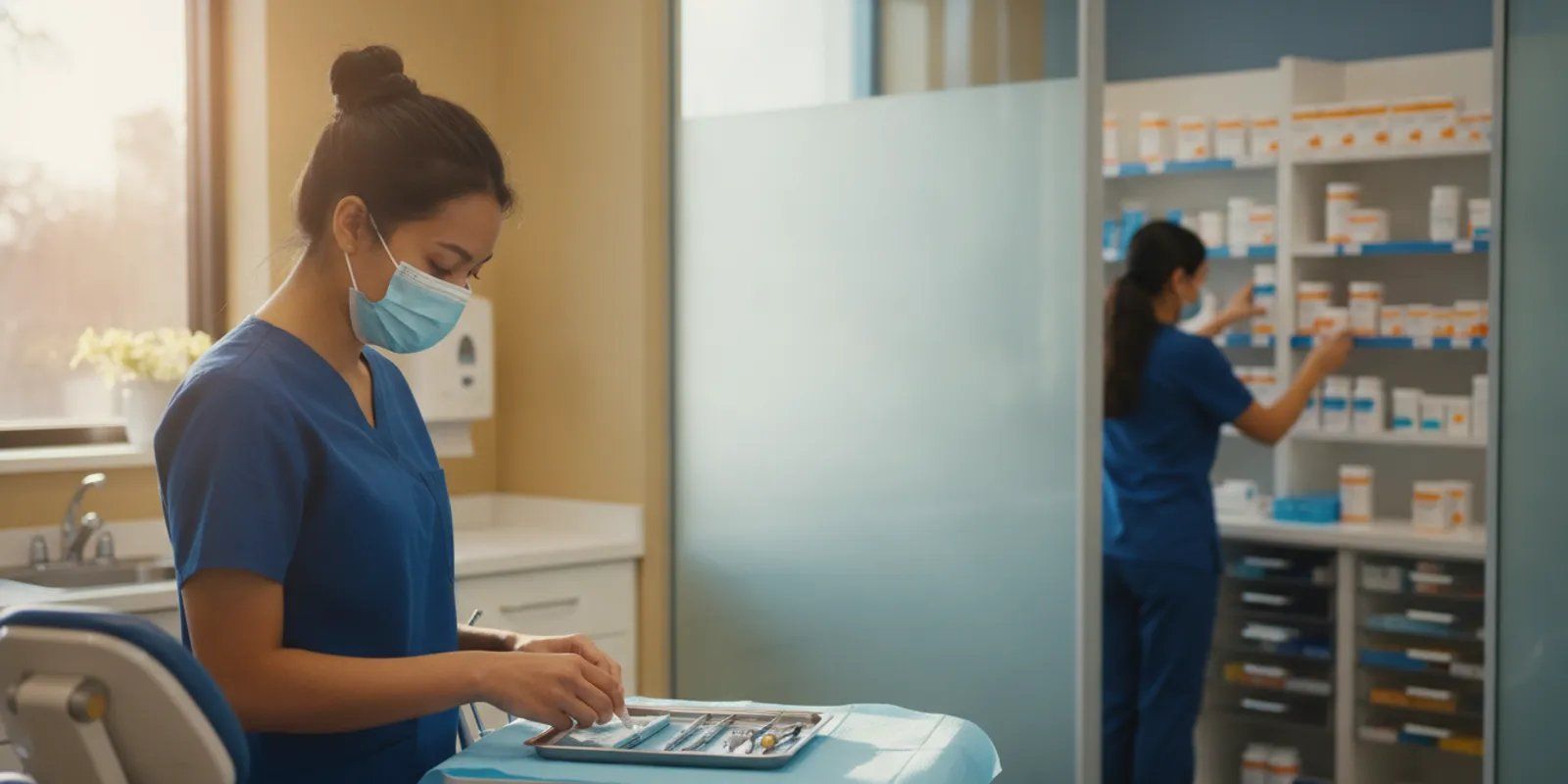
During a procedure, an assistant may pass instruments, use suction, prepare materials, or help the dentist maintain a clear view of the treatment area. Other parts of the day can include taking or processing radiographs when qualified, updating charts, preparing a room for the next appointment, and explaining routine next steps. Some tasks require specific training or authorization. A job title alone does not establish that an assistant may perform every clinical duty.
The role calls for communication as well as technical coordination. Patients may be nervous, uncomfortable, or unfamiliar with a procedure. A calm explanation and attentive manner can make a visit easier, while accurate charting and preparation help the clinical team stay organized. Dental assistants typically move between people, rooms, supplies, and records throughout a shift.
What does a dental laboratory technician do?
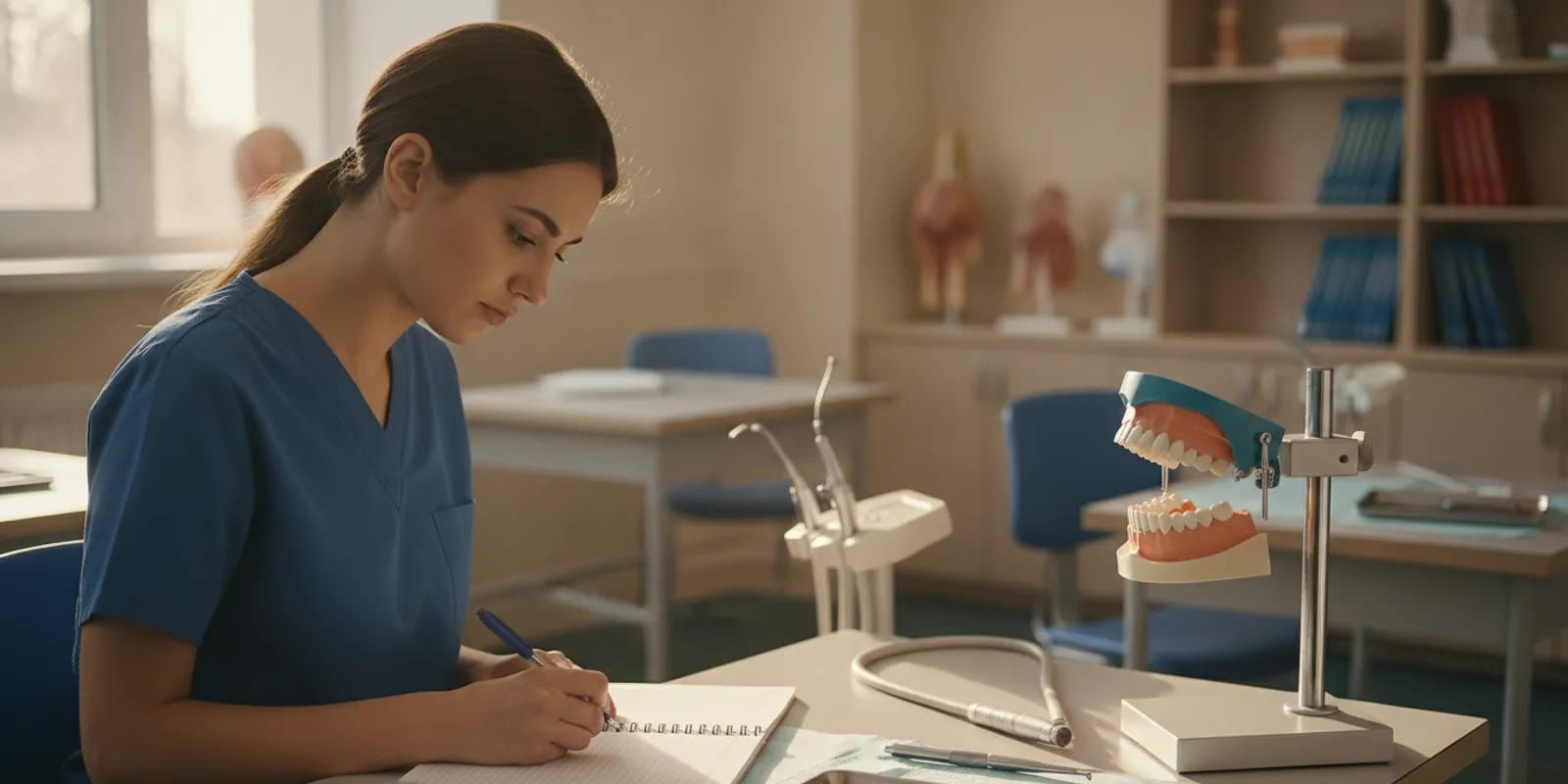
A dental laboratory technician makes or repairs items prescribed for a patient by a dentist. Depending on the lab and assignment, that can include crowns, bridges, dentures, partial dentures, orthodontic appliances, or other dental restorations and devices. Technicians work with models, design information, materials, tools, and quality checks to produce an item intended to fit a particular case.
Much of this work happens in a laboratory rather than at the patientâs chair. A technician may receive a physical impression or model, or digital information from a dental office. The technician follows the dentistâs prescription, fabricates or adjusts the piece, checks its shape and finish, and returns it to the practice. The dentist evaluates the restoration in the mouth and determines whether it needs adjustment.
The work is detail-intensive. Small differences in contour, contact, color, or fit can matter. Lab technicians may handle ceramics, metals, resins, and acrylics, depending on the restoration and the labâs processes. They often spend extended periods concentrating on a case or a sequence of production steps. The New York State Education Department lists full and partial dentures, crown and bridge restorations, ceramics, orthodontics, and castings among examples of laboratory technology work. This is an occupational overview, not a statement about Georgia training or licensing requirements. Read the New York State Education Departmentâs overview.
How do the daily responsibilities differ?
The simplest comparison is where the work happens and who the worker interacts with most. Dental assistants spend much of the day in a practice, coordinating with patients and the dentist. Lab technicians spend much of the day building or refining a prescribed item, often communicating with the dental office about specifications or changes rather than treating the patient directly.
- Patient contact: Assistants regularly interact with patients before, during, or after appointments. Lab technicians generally have limited direct patient contact.
- Primary output: An assistant supports care and clinic workflow. A lab technician produces or repairs a dental appliance or restoration.
- Work rhythm: An assistantâs schedule is often shaped by appointments and changing clinical needs. Lab work is organized around prescriptions, production stages, deadlines, and quality review.
- Team interaction: Assistants work closely with dentists and office staff in real time. Technicians work with lab colleagues and receive case details from dental practices.
- Hands-on focus: Assistants coordinate instruments, patients, rooms, and records. Technicians concentrate on fabrication, material handling, design, finishing, and fit.
Neither description guarantees what every job will involve. A small practice, large clinic, or specialized laboratory may divide work differently. Before choosing a program or applying for a position, ask what the actual day includes and which duties require additional qualifications. If you are reviewing job postings, look beyond the title: note whether the duties center on chairside assistance, records and patient flow, or restoration production and finishing.
How do materials and tools differ?
Both careers depend on precision, but they use tools for different purposes. In a dental office, assistants prepare and handle instruments and materials used during patient care. They may support impressions, temporary restorations, radiography, sterilization, and chairside procedures, depending on training and applicable rules. Their work is connected to an appointment and the dentistâs direction.
Laboratory technicians use materials to create the item itself. The process may involve shaping, layering, curing, casting, polishing, or adjusting a restoration. The specific material and method depend on the dentistâs prescription, the case, and the labâs workflow. A technician needs to understand how the selected material behaves and how to finish it accurately.
Digital tools have added another connection between the roles. A practice may capture digital scans or other case information and send it to a laboratory. The technician can use digital design and manufacturing steps to produce an appliance. In the office, digital radiography and electronic records can be part of an assistantâs workflow. Digital tools do not erase the distinction: the assistant supports clinical care, while the technician helps turn a prescription or case file into a physical restoration or appliance.
In both settings, careful handling and communication matter. An unclear impression, scan, or instruction can cause delays or require a remake. The assistant may help the practice collect and record case information; the technician may flag a missing detail or design concern. The dentist remains responsible for evaluating the clinical result and deciding how it should be used.
Where do the two paths intersect?
The roles connect through a patientâs treatment. An assistant may help prepare a patient for an impression or scan and make sure the clinical team has the information needed for a case. The office sends case details to a lab. A technician uses that information to fabricate or refine a restoration. The finished item returns to the dentist, who checks it and plans the next clinical step.
This handoff helps explain why communication and accuracy matter in both careers. Assistants benefit from understanding why complete records and clear case information matter. Technicians benefit from understanding how the appliance will be evaluated and used in a clinical setting. That shared purpose does not mean an assistant is trained to fabricate laboratory products, or that a lab technician is qualified to assist chairside.
Some people are drawn to both environments. If you like patient interaction but also enjoy learning how dental materials and restorations fit into treatment, ask a dental team how it coordinates cases with its lab. If you prefer focused production work, ask a laboratory about its common cases, use of digital design, and training expectations. Exploring the connection can clarify your interests without treating the jobs as interchangeable.
What training should you compare?
Training routes are not identical, and requirements can depend on the role, employer, location, and duties. The American Dental Association notes that some laboratory technicians complete a two-year program at a community college, vocational or technical college, university, or dental school. That is one possible education route, not a universal entry requirement. Review the ADAâs career pathway overview and confirm local expectations with schools and employers.
For dental assisting, prospective students should look closely at what a program teaches, how practice is organized, and which credentials or specific duties it prepares students to pursue. In Georgia, radiography and expanded duties have their own rules and prerequisites. Do not assume that a general training program or one certificate automatically authorizes every duty. Check relevant requirements and ask a school to explain the exact award, its issuer, and any prerequisites.
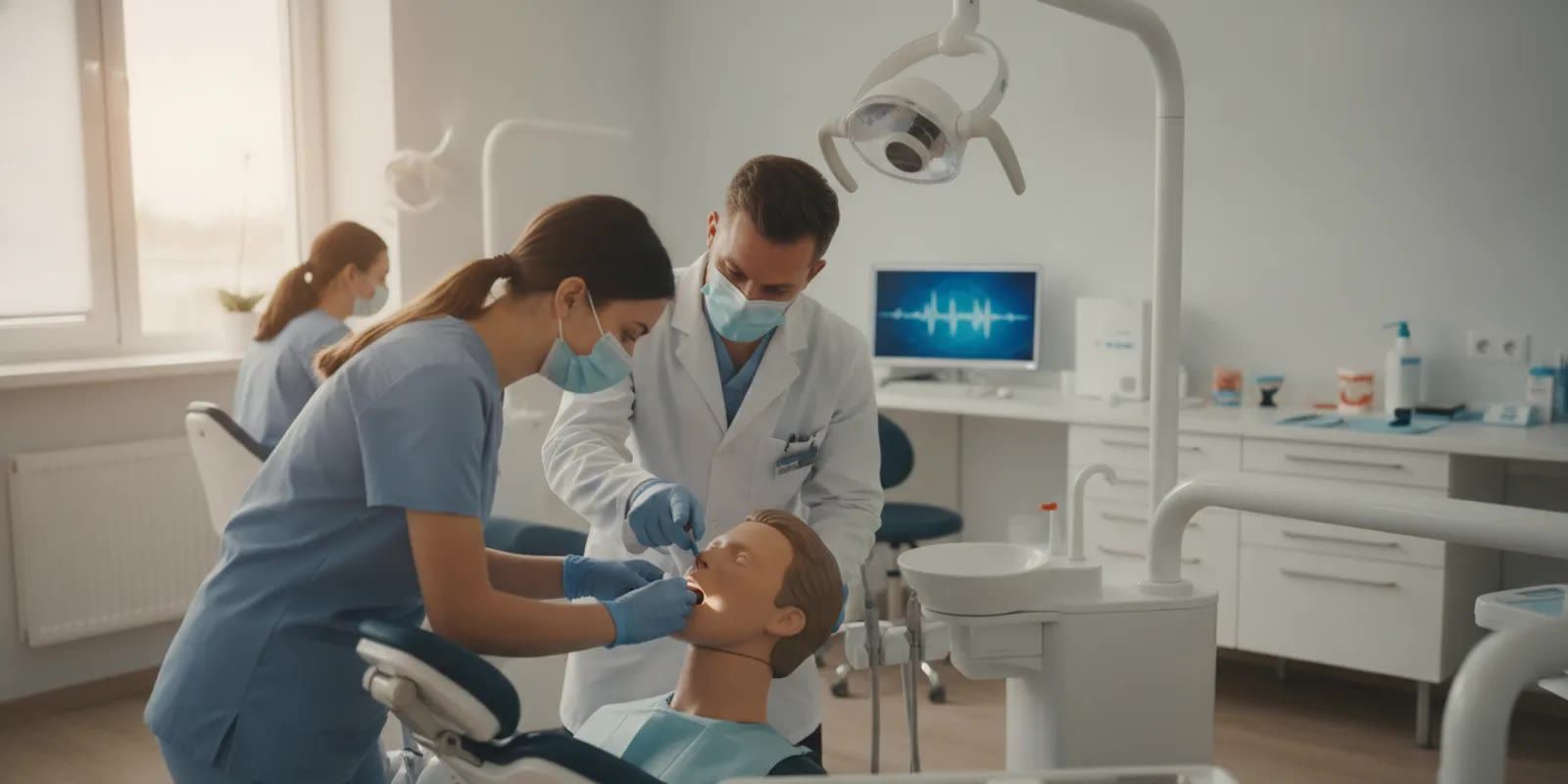
Alliance Dental Institute describes its primary offering as a 12-week, in-person dental assistant training program at its Villa Rica campus. The school describes classroom instruction and practical dental-office learning, including chairside assisting, radiography, sterilization, charting, impressions and temporary restorations, dental materials, emergency response and CPR, résumé and interview preparation, and a 40-hour externship. This is dental assistant training, not a dental laboratory technician program. People interested in laboratory fabrication should seek a program whose curriculum specifically covers that occupation.
When comparing programs, ask for details in writing. Useful questions include:
- What are the exact program length, class schedule, and required attendance?
- Which skills are taught in a classroom, practiced in a lab, or completed in a dental office?
- What is the full itemized cost, and which charges are separate?
- What certificate or other award is issued, and who issues it?
- Which duties or credentials does the course prepare students to pursue, and what additional requirements apply?
- For an externship, what are the hours and expectations, and how are placements arranged?
- For a laboratory program, how much instruction covers materials, fabrication, digital design, and quality review?
Clear answers help you compare programs based on what you will actually learn rather than a broad label such as âdental career training.â For a dental assistant course, look for the balance between explanation and supervised practice. For laboratory training, look for opportunities to work through a case from the incoming prescription or scan to fabrication, finishing, and quality review. Ask how instructors assess accuracy and what equipment students will use. The questions should match the role you want; a chairside curriculum cannot be assumed to cover laboratory production, and a lab-focused course may not prepare someone for patient-facing office duties.
How should you compare time, costs, and practical requirements?
Program length alone does not tell you how much hands-on practice a course includes or whether its schedule fits your life. Ask for the full calendar, required on-site hours, attendance rules, and externship expectations. For an in-person course, also consider travel to the campus and any confirmed externship location. Admissions and tour hours are not the same as class hours, so request the current schedule rather than relying on office availability.
Cost comparisons also need consistent details. Ask each school for a written itemized total, including registration, supplies, books, uniforms, fees, and any charges that may be billed separately. Find out what a reservation payment covers and whether it is credited or refundable; do not assume terms that are not in writing. Alliance Dental Instituteâs website has discussed a $275 reservation amount for a 2027 seat, while that amount should not be treated as the full program cost. Ask admissions for current written terms before making a decision. See questions to ask about dental assistant program costs as you prepare to compare offers.
For laboratory training, include equipment access, material practice, digital design exposure, and the amount of instruction devoted to quality review in your questions. For assisting, ask how clinical workflows, records, infection prevention, radiography instruction, and chairside practice are covered. Different programs may use similar words in their descriptions while providing different amounts or types of practice. Request specifics instead of trying to compare labels alone.
How can you decide which path may fit?
Start with the work you want to do most days. Dental assisting may be a closer fit if you want regular patient interaction, enjoy coordinating several tasks, and are interested in supporting a dentist during appointments. Laboratory technology may be a closer fit if you prefer concentrated hands-on production, working with materials, and building or adjusting custom items from detailed case information.
Then consider your preferred environment. Do you want a day shaped by appointments and face-to-face communication, or a workflow centered on cases moving through design and fabrication? Do you find it satisfying to reassure a patient and help a clinical team, or to refine a small detail until a device meets its specifications? These are preference questions, not rules about who can succeed in either field.
Finally, compare real opportunities and training locally. Read job postings carefully, ask employers about typical duties, and confirm legal or credential requirements with reliable sources. Pay information can vary by location and role, so distinguish national or regional labor data from a promise about an individual job. For dental assisting, review how to read dental assistant salary information in Georgia without treating estimates as a guaranteed outcome.
For prospective dental assistants in Georgia who can attend in person, Alliance Dental Instituteâs admissions team can explain its documented dental assistant training program and answer questions about the campus and course. Contact admissions to confirm current details before making a decision.
Frequently asked questions
Can a dental assistant work as a dental laboratory technician?
Not automatically. The jobs involve different day-to-day work, and experience assisting in a dental office does not by itself establish training in laboratory fabrication. Check laboratory expectations and pursue education that covers its required skills.
Does a dental laboratory technician usually treat patients?
Laboratory technicians generally make or repair items for cases prescribed by dentists and have less direct patient contact than dental assistants. Work arrangements vary, but the dentist evaluates the restoration in the patientâs mouth and directs clinical care.
Do digital scans make the two careers the same?
No. Digital scans can connect the dental office and laboratory by transferring case information. Assistants may support office workflows, while laboratory technicians may use digital information in designing or making an appliance. Their core responsibilities remain distinct.
Does Alliance Dental Institute train dental laboratory technicians?
The schoolâs described program is dental assistant training, not laboratory technician training. Prospective students seeking lab fabrication education should look for a program that expressly teaches that careerâs materials, design, and production skills.
Call admissions with your training questions
Both careers contribute to dental care, but they suit different interests and prepare people for different work. Compare daily tasks and verified training details to choose the path that aligns with the work you want to do.