Dental Assistant vs Medical Office Assistant
Dental assistant vs medical office assistant: compare chairside work, front-desk tasks, training, and Georgia rules before you choose.
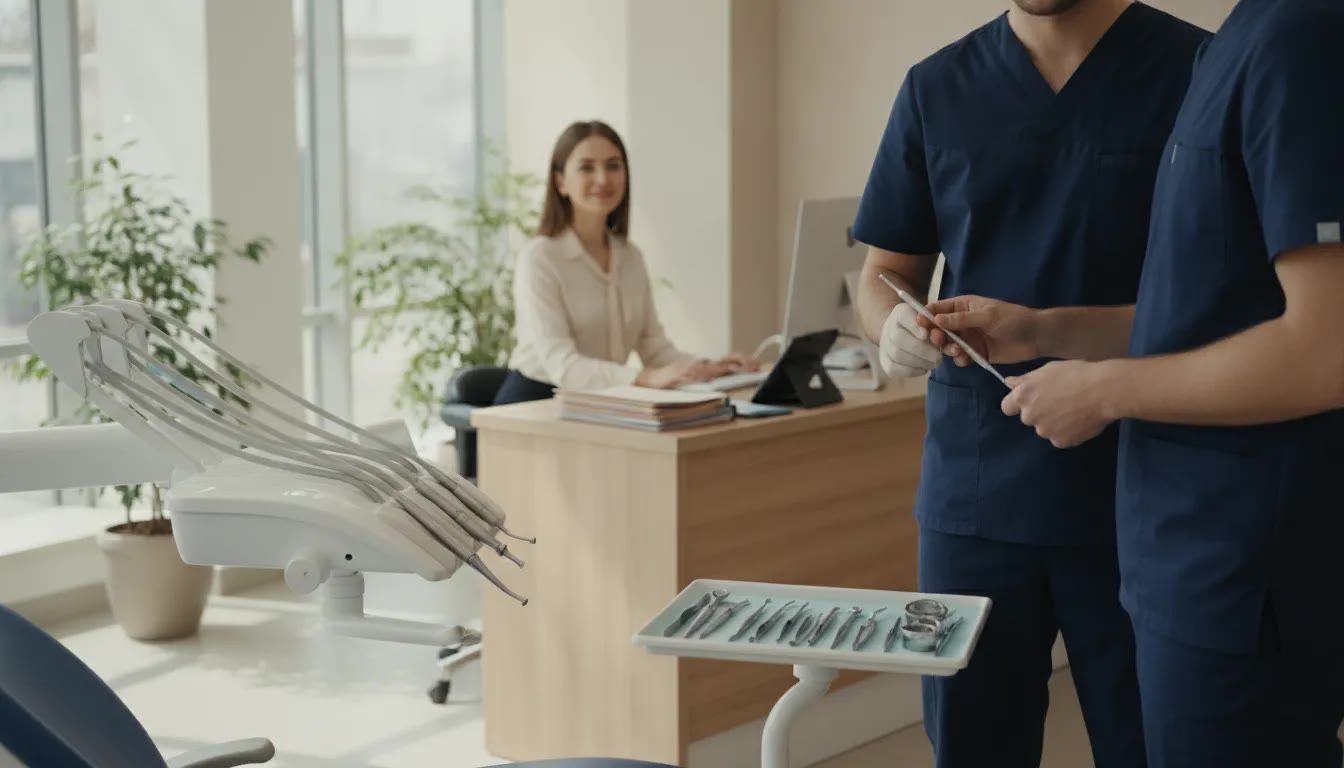
A dental assistant vs medical office assistant search usually starts with one question. Are these the same job with two names? They are not. A dental assistant spends most of a visit next to the dentist, passing instruments and watching the patient. A medical office assistant spends that visit at the front of a medical practice, keeping the schedule and the chart moving.
The U.S. Bureau of Labor Statistics tracks the office role as medical secretaries and administrative assistants. That work is phones, the schedule, charts, and claim forms. Alliance Dental Institute trains dental assistants at its Villa Rica campus. It does not run a medical office assistant program.
Ask about the dental assistant program
How the dental assistant vs medical office assistant work differs
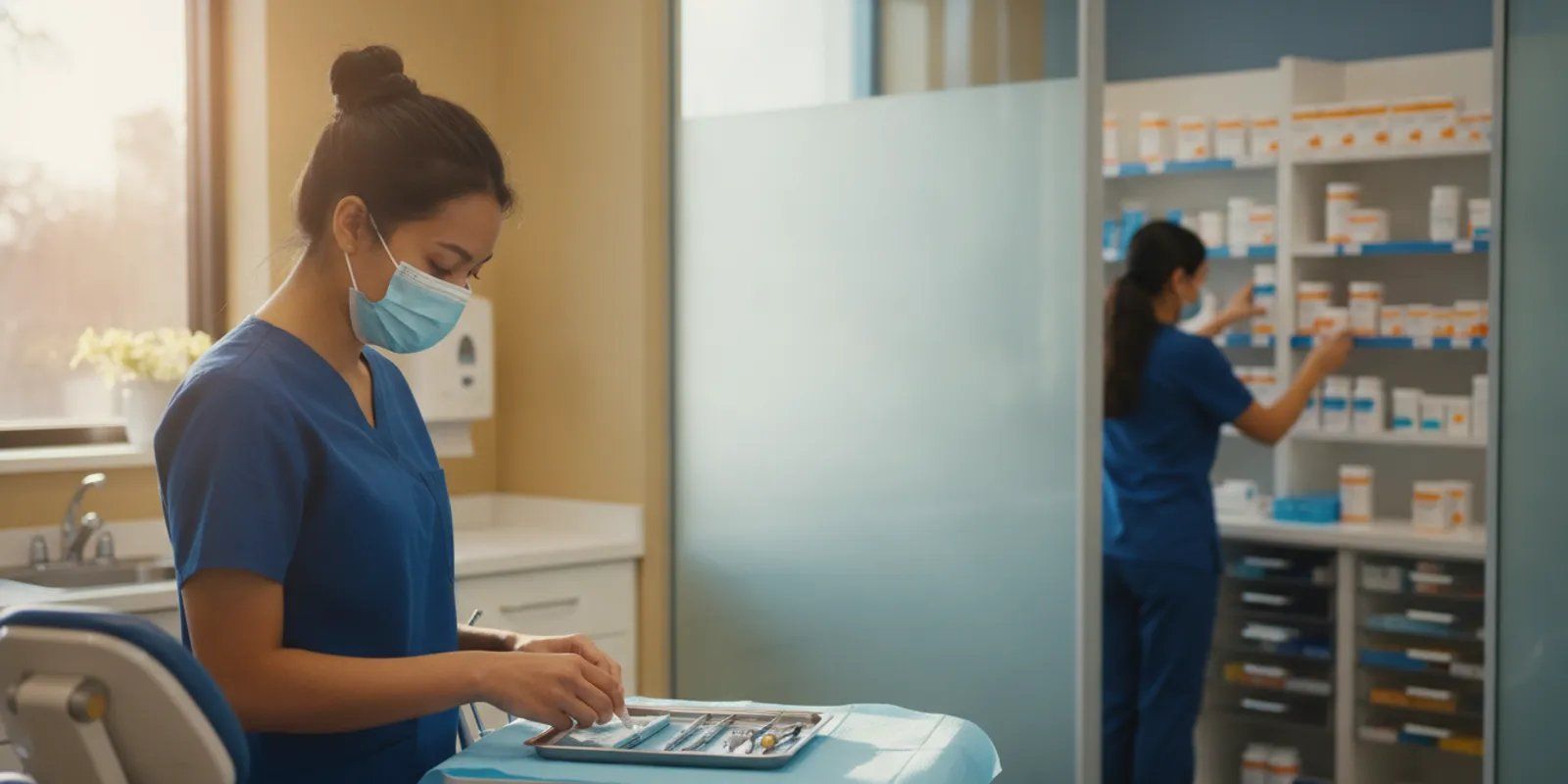
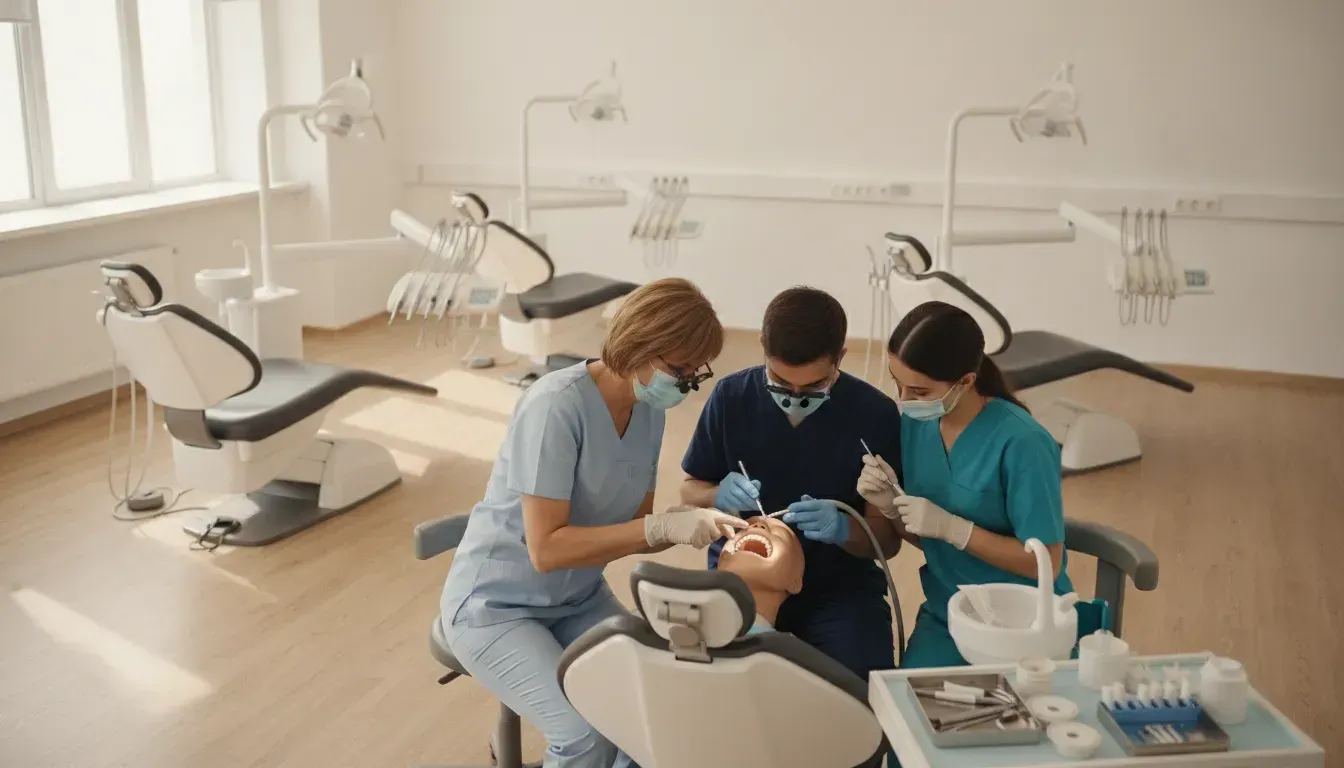
The Bureau of Labor Statistics says dental assistants provide patient care, take x-rays, keep records, and schedule appointments. The work is chairside first. O*NET lists preparing patients, sterilizing instruments, assisting during procedures, and giving oral-care instructions as core tasks. Scheduling and records are part of the job. They are not the whole job.
A medical office assistant's day is built from office tasks that need medical terminology. O*NET's profile for medical secretaries and administrative assistants lists answering phones and confirming appointments. It also lists greeting visitors, completing insurance forms, routing records, and compiling charts. That person may schedule an x-ray from a physician's order. They do not expose the radiograph or assist at the chair.
Titles blur the line on job boards. Posts use medical office assistant, medical receptionist, clinic office assistant, and medical secretary for overlapping front-desk work. None of those titles is a dental assistant. If a listing is mostly phones, billing, and charts, it is office work even when the employer is a clinic.
Read the task list before you read the title. A posting that says "assist the dentist during fillings, manage suction, and sterilize instruments" is dental assisting. A posting that says "confirm appointments, scan insurance cards, and update the chart" is medical office work. The building can look similar. The hands-on work does not.
Where each person spends the day
Almost all dental assistants work in dentists' offices, the Bureau of Labor Statistics reports. The room, the instruments, and the patient are a few feet apart. You stand for long stretches. You reset the room between people. You hear the handpiece and watch the dentist's hands.
A medical office assistant can work in a physician office, clinic, hospital unit, or lab. The setting changes the software and the words you use. It does not change the fact that the work is administrative. You sit more. You manage a queue of calls. You keep the schedule from falling apart when someone runs late.
Both jobs deal with anxious people, just at different points in the visit. The dental assistant meets that anxiety in the chair, often for a few intense minutes during treatment. The medical office assistant meets it at check-in, then again when a bill or a referral does not make sense. If you want to be part of the procedure, pick the chair. If you want to own the schedule, pick the desk.
Hours differ by employer, not by a national rule. Many dental offices run daytime weekday schedules. Hospitals and some clinics do not. Ask about nights and weekends in the interview. Do not assume either job is automatically a quiet nine-to-five.
What Georgia lets a dental assistant do
Georgia draws a hard line around the dental side. Georgia Board of Dentistry Rule 150-9-.01 defines a dental assistant as someone employed in a dental office to assist the dentist. The rule expects familiarity with sterilization, general mouth hygiene, secretarial work, appointments, and bookkeeping. It also says a dental assistant may not perform dental hygiene treatment.
Direct supervision has a specific meaning in that rule. A Georgia-licensed dentist is in the office or treatment facility. The dentist diagnoses the condition and authorizes the procedure. The dentist stays in the facility while the assistant performs it. The dentist evaluates the work before the patient leaves.
Rule 150-9-.01 also lists general duties a dentist may delegate when they are easily reversible and do not raise the patient's risk. Examples include diagnostic impressions, placing and removing a rubber dam, applying topical anesthetic, and fabricating temporary crowns outside the mouth. Placing and exposing radiographs is on that list only after the training required by Georgia's X-rays in the Health Arts rules.
Expanded duties are a different rule. Rule 150-9-.02 covers extra tasks a dentist may delegate only after the assistant meets that rule's qualifications. Those qualifications are a high school diploma or equivalent, current CPR certification, and a certificate for the specific duties listed on that certificate. A certificate for one duty does not cover every expanded function. The school's marketing names are not the same thing as that certificate.
Neither rule is a job description for a medical front desk. A medical office assistant is not working under Georgia's dental-assistant duty list. Dental-assistant training does not authorize work in a physician's office. Office experience does not authorize chairside dental tasks either.
Dental assistant vs medical office assistant through one visit
Picture one patient moving through a dental office. Then picture a similar visit in a medical practice. The split stays consistent even when one person helps on both sides of the desk.
| Part of the visit. | Dental assistant. | Medical office assistant. |
|---|---|---|
| Before the patient arrives. | Sets up the treatment room and sterilized instruments. | Confirms the appointment and pulls the chart or intake forms. |
| When the patient checks in. | May update the dental chart, then seats the patient. | Greets the patient, checks insurance details, and routes them. |
| During care. | Passes instruments, manages suction, and assists the dentist. | Stays at the desk and does not join the procedure. |
| Images. | May expose dental radiographs after required training. | May schedule imaging that someone else performs. |
| After the visit. | Breaks down the room and prepares for the next patient. | Files records, sends correspondence, and works claim forms. |
Dental assistants do touch the schedule and the chart. The Bureau of Labor Statistics includes records and appointments in the occupation. The difference is sequence. In a dental office, the front-desk moment is a slice of the day. In a medical office assistant job, it is the day.
A dental practice can still employ someone whose whole job is the front desk. That person may answer the phone, confirm recalls, and take payments. They are doing office work inside a dental practice. They are not working as the dental assistant unless the dentist is also delegating chairside duties under the Georgia rule. Read the posting for instruments, sterilization, and the treatment room. Those words mark the clinical role.
What training each path asks for
Dental assisting usually starts with a postsecondary nondegree award, the Bureau of Labor Statistics says. States differ. Some require an accredited program and an exam. Others allow on-the-job learning. Georgia still sets its own limits on what an assistant may do, including radiography and expanded duties.
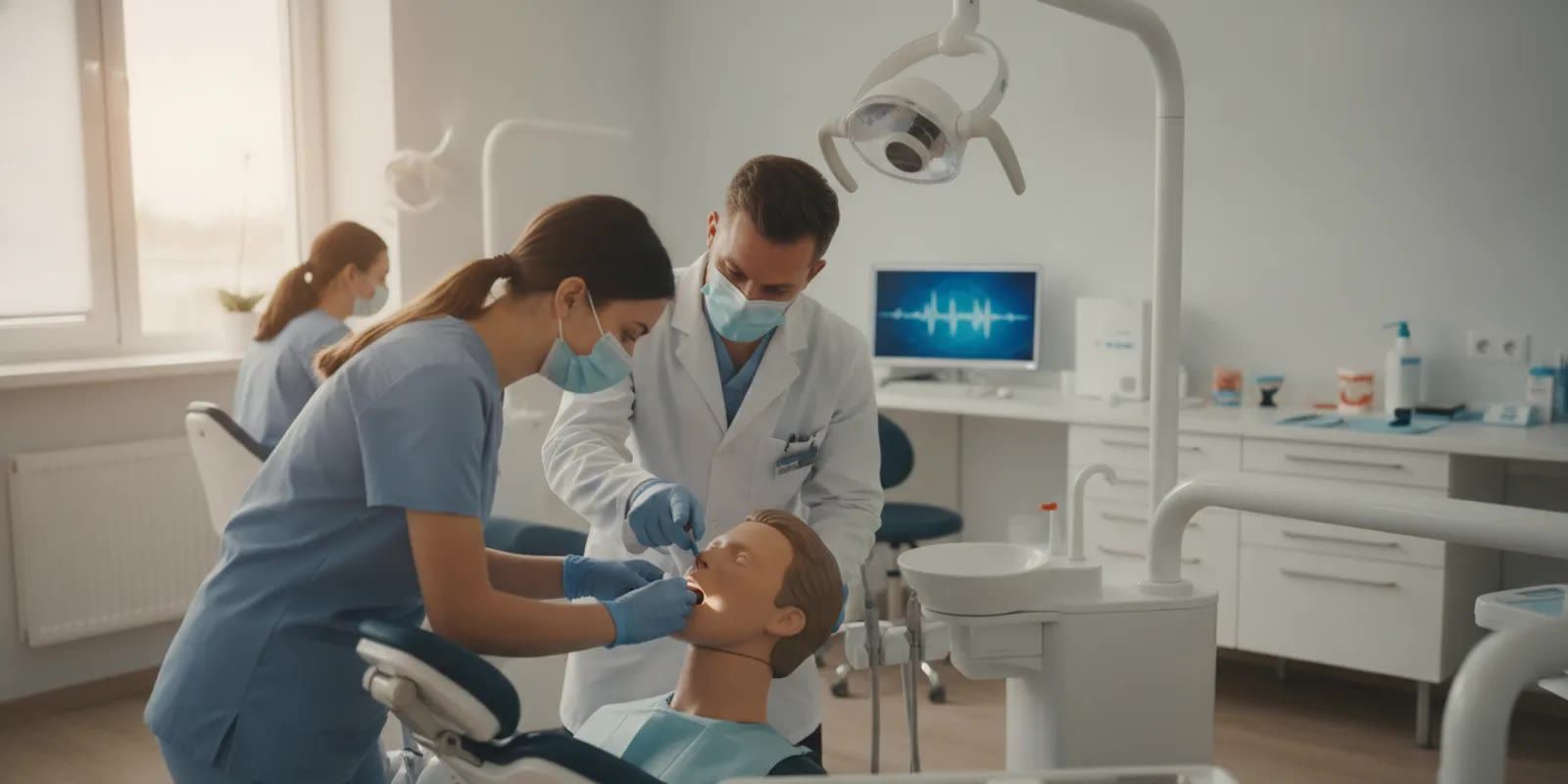
Alliance Dental Institute's 12-week dental assisting curriculum is built for that chairside path. Students practice sterilization and the autoclave. They practice digital radiography on a manikin, plus suction and instrument transfer. The course also covers oral anatomy, infection control, Dentrix and Eaglesoft charting, impressions, temporary crowns, dental materials, and CPR. A 40-hour externship places students in dental offices with patients.
That curriculum does not teach medical-practice billing, hospital unit workflows, or physician-office terminology. If those are the skills you want, this program will not give them to you. The school is a dental assistant training school at one Villa Rica campus. It does not offer a medical office assistant track, and it is not a degree program.
Medical secretaries and administrative assistants typically enter with a high school diploma. They then learn medical terminology and office software for the setting they join. The Bureau of Labor Statistics groups them with secretaries and notes that medical specialties may need extra terminology training. That is a different course of study from chairside dental assisting. Finishing one does not substitute for the other.
For a closer look at how a dental office day is sequenced, read what a dental assistant does day to day. This comparison stops at the role split. It does not walk a full shift, and it does not cover pay. Wage questions belong on a salary page, not in a role comparison.
How to tell which posting you are reading
Use the duty list, not the job title. Work down this list when a posting mixes dental and medical words.
- Circle every task that happens in a treatment room. Instruments, suction, sterilization, and seating the patient point to dental assisting.
- Circle every task that happens at a desk. Phones, insurance forms, referrals, and appointment reminders point to medical office work.
- Check who you report to. A dentist in the same office is the dental-assistant pattern. A clinic manager or physician group is the office-assistant pattern.
- Look for imaging language. "Expose dental radiographs" is a clinical task with a training rule. "Schedule the patient's x-ray" is an office task.
- Ignore prestige words. "Clinical support" and "patient care coordinator" can mean either role. The verbs tell you which one.
Bring that marked-up posting to a school tour. Ask which of the circled tasks the curriculum actually practices. A dental assisting course should be able to point to chairside skills, infection control, and charting software used in dental offices. It should not pretend to prepare you for a hospital unit desk.
How to choose a path
Pick the dental assistant path if you want the treatment room. That means instruments, infection control, and patients who are in the chair. The Bureau of Labor Statistics Occupational Outlook Handbook, updated for the 2025 to 2035 projections, projects dental assistant employment to grow 7 percent, with about 53,000 openings a year. The May 2025 median wage was $48,070. An earlier BLS projection, still cited on some career pages, was 6 percent growth from 2024 to 2034. Those are national figures. They are not a promise of Georgia pay, and they are not a promise of a job after training.
Pick the medical office assistant path if you want the front desk. That means scheduling, insurance forms, charts, and medical terminology, in a physician office or clinic rather than at a dental chair. The BLS national employment matrix for medical secretaries and administrative assistants projects about 4.8 percent growth from 2025 to 2035, from about 979,000 jobs to about 1,026,000. Growth is not a wage quote. This article does not compare pay. Local offers vary, and neither projection is a placement rate.
Try a short test. Would you rather set up a tray and stay with the dentist for a filling? Or would you rather spend the morning confirming appointments and claim forms? The first answer points to dental assisting. The second points to medical office training somewhere else. Alliance Dental Institute does not offer that program.
Contact the Villa Rica campus and ask what the 12-week course covers, how the externship is arranged, and which duties stay with the dentist. Admissions is open Monday through Friday, 9 a.m. to 5 p.m.
FAQ
Is a medical office assistant the same as a dental assistant?
No. A dental assistant assists a dentist at the chair and with sterilization, records, and appointments. A medical office assistant handles scheduling, charts, phones, and insurance forms in a medical setting. The Bureau of Labor Statistics tracks them as different occupations.
Can a medical office assistant work as a dental assistant in Georgia?
Not from the job title alone. Rule 150-9-.01 limits general dental-assistant duties to a dental office under a dentist's direct supervision. Expanded duties under Rule 150-9-.02 need a high school diploma or equivalent, current CPR, and a certificate for the listed duties. Radiography has its own training requirement. Medical front-desk experience does not meet those conditions.
Does Alliance Dental Institute train medical office assistants?
No. The institute is a dental assistant training school at one campus, 427 W Bankhead Hwy, Villa Rica, GA 30180. The 12-week program and 40-hour externship cover dental assisting, not medical office administration.
Do dental assistants only do clinical work?
No. Rule 150-9-.01 expects dental assistants to know secretarial work, appointments, and bookkeeping, along with sterilization. The clinical tasks are what separate the role from a medical office assistant, who does not assist during treatment.