Dental Assistant Interview Questions to Practice
Practice dental assistant interview questions on chairside work, infection control, x-rays, charting, and reliability before your first office interview.

Dental assistant interview questions usually sound simple. Tell me about yourself. How do you handle a nervous patient? What do you know about infection control? The hard part is answering with real examples when you have little or no paid experience in an office.
This guide is for first-time applicants who can train in person in Villa Rica, Georgia. It covers chairside assisting, infection control, radiography, charting, communication, and reliability. Each section gives a short answer frame you can fill with lab practice, a 40-hour externship, or work from another job. It does not promise that any office will hire you.
Ask about interview practice at Alliance Dental Institute
Dental assistant interview questions, decoded
Dental assistant interview questions are not a test of whether you memorized the perfect script. They help an office judge your judgment, honesty about what you have practiced, and ability to fit into a team. A strong answer shows how you think when a patient, dentist, or coworker needs your attention.
Use a simple four-part structure for questions about your experience or a workplace situation:
- Situation: Briefly explain what was happening and what needed attention.
- Action: Describe exactly what you did and how you communicated with the people involved.
- Safety check: Explain what you checked before moving forward, such as patient comfort, room setup, instrument handling, infection-control steps, or the dentist's direction.
- Result: State what happened and what you learned or would repeat next time.
That safety step matters. An interviewer wants to hear more than "I got the job done." They want to know that you recognize when to pause. Ask a question, follow the practice's process, and protect the patient. If you have not been paid to work in a dental office, say so plainly. Then use relevant practice instead: a lab exercise, a 40-hour externship, a classmate or teacher, schoolwork, or a situation from another job. The California Dental Association interview toolkit notes that a classmate or teacher can stand in for a customer, coworker, or supervisor when an applicant has no work history.
Prepare for questions about why you want dental assisting, how you would help an anxious patient. How you work with dentists and staff, and how you keep track of tasks during a busy day. DANB's April 10, 2023 guide recommends researching the specific practice before the interview. That preparation helps you explain why the office interests you; it is usually better than leading with questions about pay or commute. Dress neatly, listen carefully, and avoid claiming skills you have not yet practiced.
An interview also gives you a chance to understand the practice. Listen for details about teamwork, patient communication, protective equipment, charting software, and the physical parts of the role. Asking respectful questions shows that you are evaluating the fit honestly, too.
Your resume should make these examples easier to discuss. Use our guide to building the resume that supports your answers, then rehearse a few honest examples aloud rather than trying to predict every question.
Chairside and infection control questions
Interviewers want to know if you understand the rhythm of a dental room. They are not scoring a list of instrument names. Explain what you would do, what you would check, and when you would ask. If you have not worked in a practice, use lab practice, an externship, or another job that required you to stay organized.
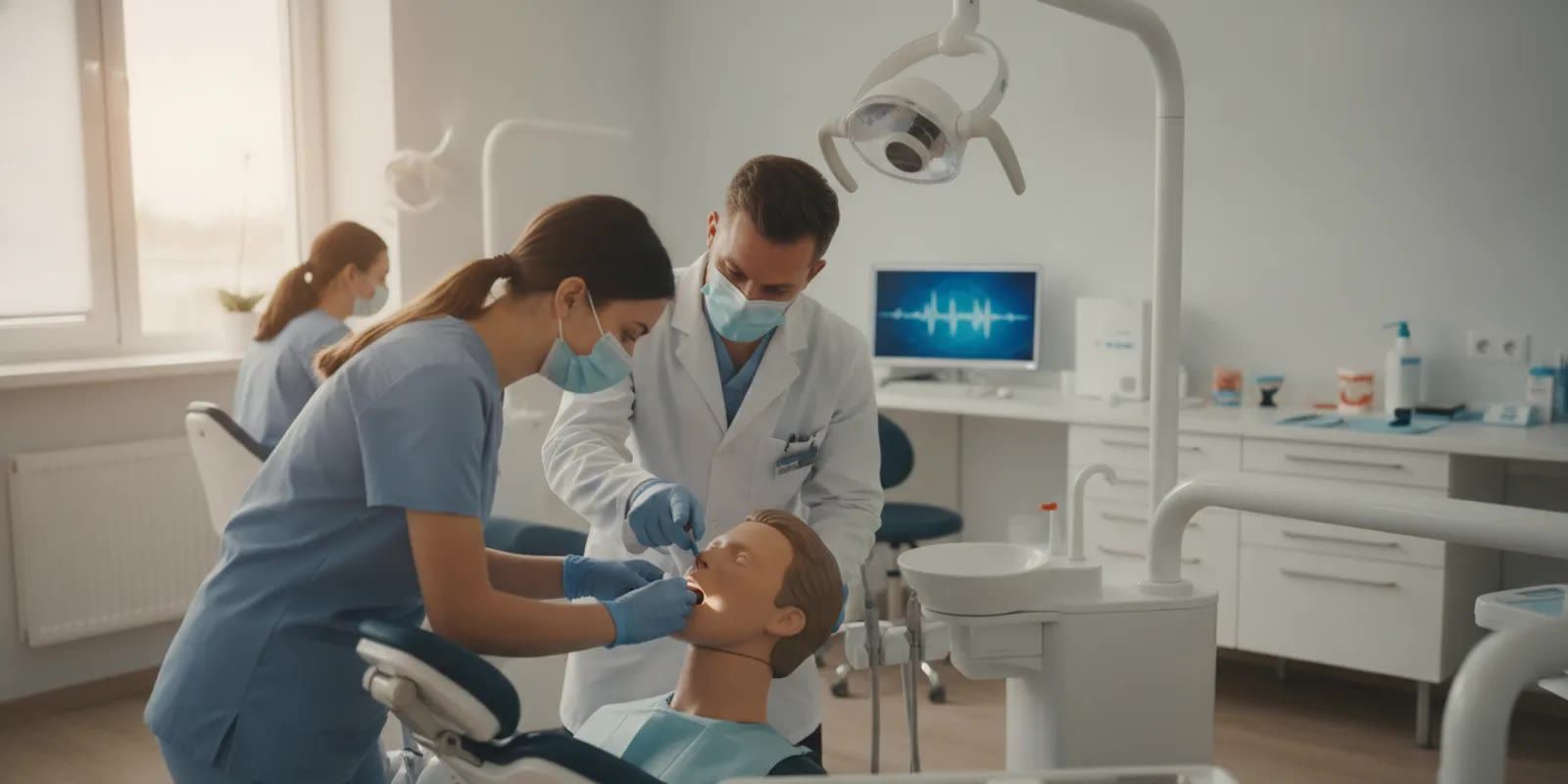
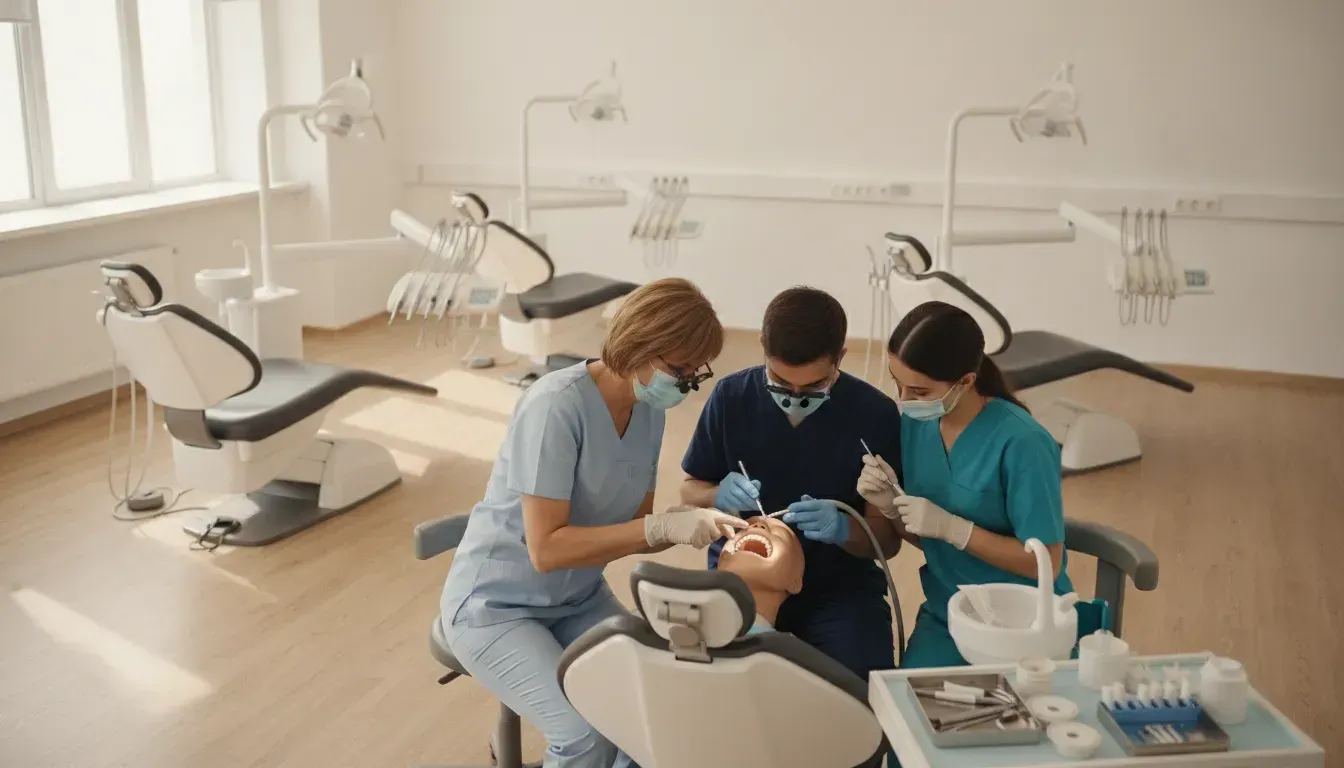
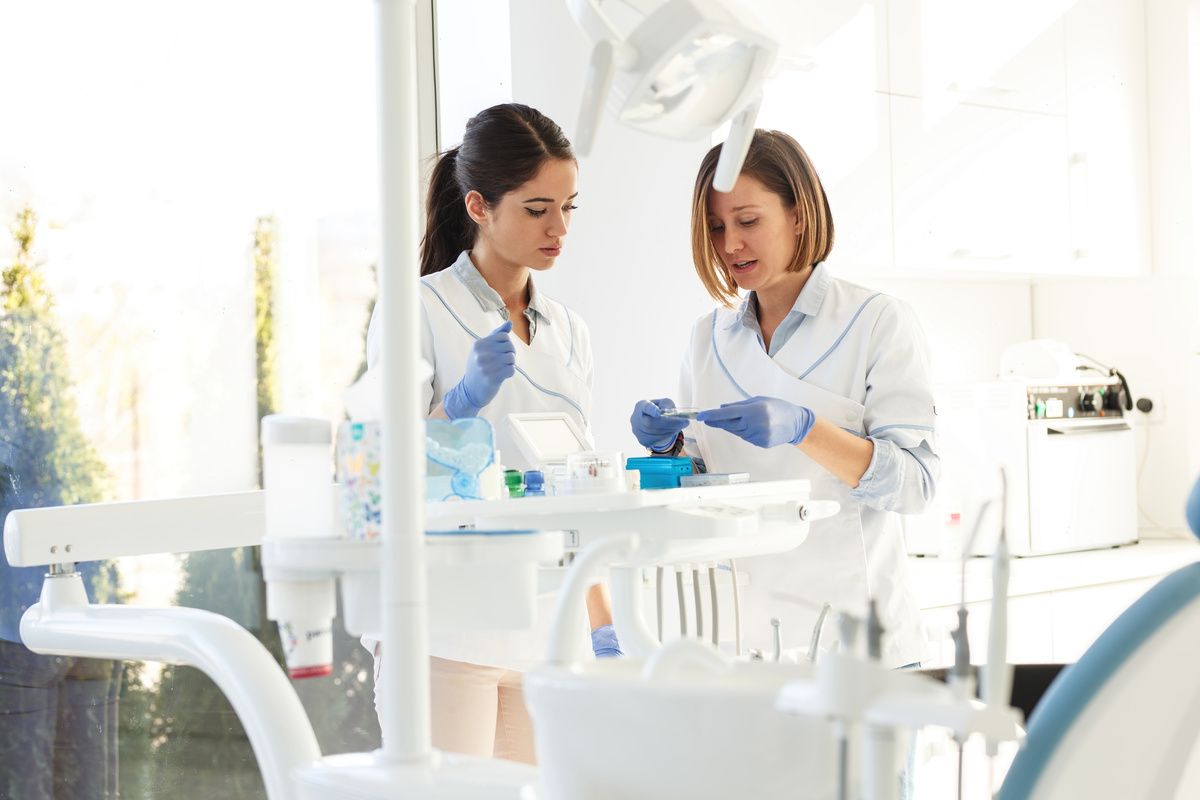
For chairside questions, describe instrument transfer as a careful task. Anticipate the next step when you can. Keep the tray organized. Pass instruments only as the dentist directs. High-speed and low-speed suction do different jobs. Place the suction so the dentist can see, and keep it comfortable for the patient. If you are unsure, pause and ask.
That answer connects to the duties described by the Bureau of Labor Statistics, including preparing rooms, sterilizing instruments, handing instruments, and using suction. In Georgia, Rule 150-9-.01 also matters: an assistant is expected to understand sterilization, but may not perform dental hygiene treatments. Direct supervision means the dentist diagnoses and authorizes the work, stays on site, and evaluates it before the patient leaves.
| Chairside support | Infection control | What a strong answer shows | What to avoid |
|---|---|---|---|
| Instrument transfer, suction, and a dry field. | Room turnover, disinfection, the autoclave, and PPE. | A clear sequence and a willingness to ask. | Guessing or claiming a restricted duty. |
For infection-control questions, walk through the sequence. Discard single-use items. Clean and disinfect surfaces. Handle instruments safely. Run the autoclave the way you were trained. Mention gloves, a mask, and eye protection. The California Dental Association notes that the job can include fluids, odors, noise, and hours in protective gear. Be candid. Do not dramatize it.
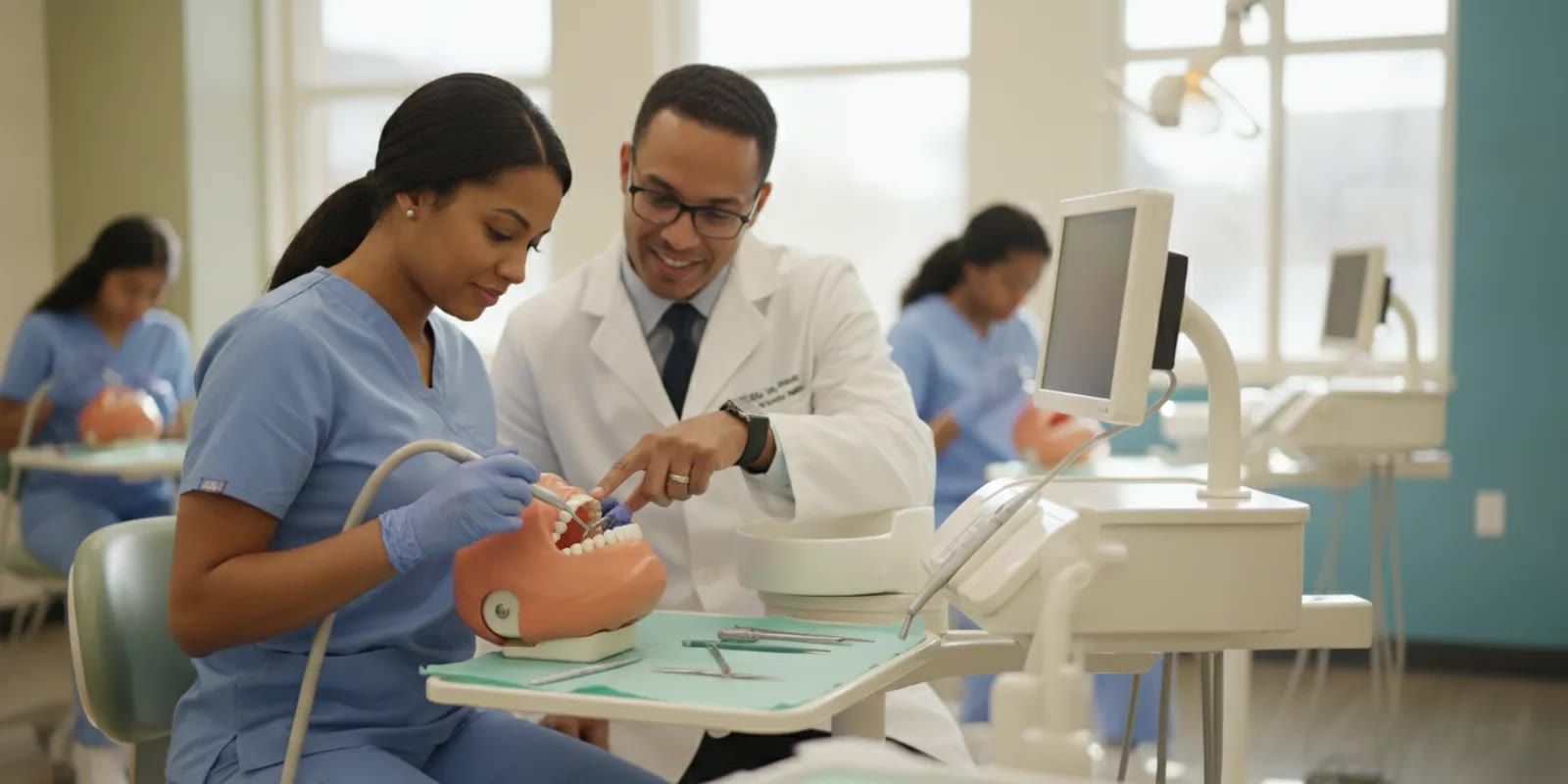
Alliance Dental Institute describes hands-on chairside and sterilization practice, including suction, instrument transfer, room turnover, and autoclave work. Use those concrete skills to build an honest answer, and separate what you have practiced under supervision from what you are still learning.
Radiography, charting, and scope questions
Questions about x-rays and charting are scope questions in disguise. The interviewer wants the truth about what you have practiced and what you are allowed to do. Do not say you are certified, licensed, or ready to take radiographs on patients unless that is already true for you.
If your training used a dummy head, say that. Describe digital sensors, how you positioned the sensor, and how you protected the patient and yourself from unnecessary exposure. In Georgia, Rule 150-9-.01 allows a dental assistant to place and expose radiographs only after completing the training required by Ga. Comp. R. & Regs. 111-8-90-.04. An interview is a good time to ask which images the office takes and what training it expects before you expose them.
Charting questions work the same way. Dentrix and Eaglesoft are common practice-management programs, and they are topics students can practice in class. Say that you have entered findings in a training exercise if that is what you did. Do not say you manage a live patient record unless you have done that in an office. A careful answer is simple. You enter the notes the dentist gives you. You ask before changing a record you do not understand.
Expanded duties are a separate rule. Rule 150-9-.02 says an expanded-duty assistant needs a high school diploma or the equivalent, current CPR, and a certificate that names the specific duties. Only the duties listed on that certificate may be performed, and the office keeps a copy. Georgia does not issue a general dental assistant license. Read the guide to Georgia expanded-duty rules before you guess.
- Say you practiced sensor placement on a manikin. Add that you have not exposed patient films yet.
- Say you practiced chart entries in class. Follow this office's Dentrix or Eaglesoft steps.
- Perform an expanded duty only when it is on your certificate and the dentist assigns it.
Communication and reliability questions
People questions show up as often as clinical ones. An interviewer may ask how you help a nervous patient, what you do when someone arrives late, or how you handle a tense moment with a coworker. The useful pattern is to notice the problem, ask one clear question, explain the next step, and stay kind.
For an anxious patient, greet the person by name. Ask what worries them. Explain only the next step. Do not promise that a procedure will be painless. The DANB interview guide also warns against criticizing old coworkers. If a team question comes up, talk about listening and feedback. Leave the complaint out.
Reliability is easier to prove than personality. Confirm the hours before you accept an interview or a job. Arrive early enough to review the schedule. Follow the room-setup routine. Ask when an emergency patient changes the plan. A late patient is an office-policy question. Greet them, tell the front desk, and do not scold them in the chair.
The Bureau of Labor Statistics says assistants explain care and schedule appointments, among other duties. Its national outlook, read in October 2026, is projected employment growth of 7 percent from 2025 to 2035. Those numbers describe the country. They are not a wage offer from a Georgia office and not a result Alliance Dental Institute can promise. If pay comes up, answer honestly about your needs, then return to the work. After you are hired, use a separate plan for preparing for the first day.
Answers when you have no office experience
Many first interviews stall on one line. How much experience do you have? If the honest answer is none in a paid dental job, say that first. Then move to the closest true work. A 40-hour externship, a lab session, or a retail job can show how you act when someone is waiting.
Build one example for each theme below. Keep the dental claim small. The habit is what the interviewer can believe.
- Chairside. In lab, I passed instruments in the practiced order. I stopped when I lost the sequence.
- Infection control. I set up a room and followed the autoclave steps I was shown. I asked before skipping a wipe-down.
- Communication. At my last job, I calmed a frustrated person. I repeated the next step and the wait time.
- Reliability. I was scheduled at 8 a.m. I arrived early enough to read the list before we started.
Do not stretch a manikin exercise into patient care. Do not say you have taken x-rays on people if you have only used a practice head. Offices can check. A short, exact answer builds more trust than a long one that blends class and clinic.
You can also say what you want to learn in the first month. Name one skill, such as this office's charting screen or its room-turnover order. That shows you expect training. It does not ask the office to lower its standard. If the interviewer wants a reference, a teacher or an externship supervisor is fair. The California Dental Association toolkit treats a classmate or teacher as a valid stand-in when there is no supervisor yet.
How to prepare your answers
You do not need a binder of sample scripts. You need a few true stories and one pass out loud. Alliance Dental Institute's resume and interview practice in the curriculum covers resumes, attire, expected questions, and working interviews. The program also includes a 40-hour externship. Use that practice if you have it. A class exercise is not a job offer.
- Pick four true stories from lab practice, the externship, school, or another job. Cover chairside work, communication, a corrected mistake, and showing up on time.
- Write a 45-second answer to "Tell me about yourself." Start with where you are now. Name one skill you have practiced. End with why you want this office.
- Read the office website and recent public reviews. Note one service, one patient comment, or one tool you can ask about. Do not recite the whole site.
- Practice one clinical answer and one people answer aloud. Time them. Cut any sentence that claims a duty you have not done.
- Choose simple professional clothes and closed-toe shoes you can stand in. Attire matters, but it will not cover a vague answer.
- Plan a short thank-you note the same day. Name one topic you discussed, such as infection control or the schedule, and thank the person for the time.
If a question surprises you, pause and say you want to answer it accurately. Then use the four-part frame: situation, action, safety check, and result. That habit is more convincing than a long speech.
Questions you should ask before you leave
An interview is also your chance to see whether the office is a fit. Prepare four questions and ask at least two. Write them on a card so you do not forget when the conversation runs long.
- What does a typical morning look like for a new assistant here?
- Which charting program do you use, and how is a new person trained on it?
- Which radiographs would I take, and what training do you require first?
- How does the team handle a late patient or an emergency visit?
Listen for a clear answer. "We will show you" is a start. "We expect you to know every expanded duty on day one" is a warning unless you already hold those certificates. You can ask about hours in one sentence. You can ask about pay in one sentence. Then stop. The DANB guide says those topics should not be the focus of why you want the job.
A working interview, if the office offers one, is a different meeting. You may be asked to pass instruments, turn a room, or watch a procedure. Ask what you will do, how long it will last, and whether it is paid. Do not treat it as a hire. Afterward, send the thank-you note and name one task you observed. That note is part of the interview, not a follow-up after you already have the job.
Frequently asked questions
What should I say when asked to tell me about yourself?
Give a 45-second snapshot. Say where you are in training or work, name one skill you have actually practiced, and say why this office caught your interest. Skip your life story and any claim you cannot explain.
How do I answer dental assistant interview questions with no experience?
Use lab practice, class feedback, a 40-hour externship, or a non-dental job. The California Dental Association says interviewers can ask about a classmate or teacher when there is no work history. Say what you practiced and what you have not done yet.
What should I wear to a dental assistant interview?
Wear clean, simple professional clothes and closed-toe shoes you can stand in. You do not need scrubs unless the office asks for them. Neat attire helps, but your examples matter more.
What questions should I ask the office?
Ask about a typical day, how new assistants are trained, which charting software the office uses, and which radiographs you would be expected to take after training. Also ask how the team handles a full schedule. Save pay and hours for a direct, short question.
Does Georgia license dental assistants?
No. Georgia does not issue a general dental assistant license. Rule 150-9-.02 requires a high school diploma or equivalent, current CPR, and a certificate for each expanded duty you perform. Ask the office which duties it assigns and which certificates it requires.
Ask about interview practice
If you want to practice these answers before an interview, ask how the Villa Rica program teaches them. Admissions can explain the 12-week in-person schedule and the 40-hour externship. That call is about training. It is not a job offer.
Call (470) 801-4234 or contact Alliance Dental Institute to ask about interview practice.
Practice the answers out loud before you go.