Dental Assistant Dental Photography Basics
Learn how dental photography supports care, what an assistant may do, and what to ask about equipment, patient communication, training, and records.
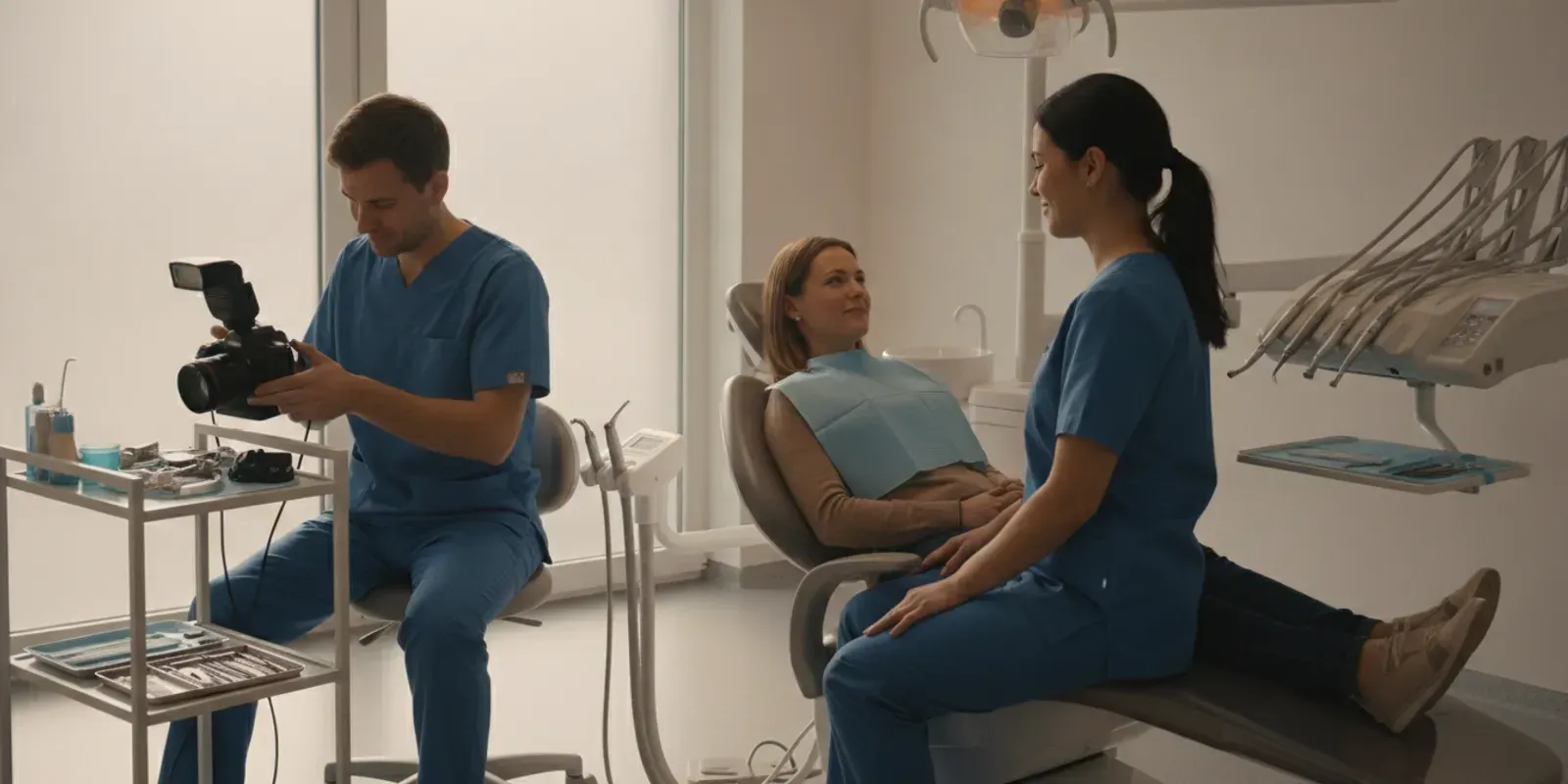
Dental assistant dental photography can support documentation, communication, and education, but it is not simply a matter of pointing a camera and pressing a button. For someone considering dental assisting, a better first step than buying equipment is learning why a team wants an image, how the office handles it, and what training and direction are provided.
What is dental photography used for?
Dental photography means making images of the teeth, mouth, or related treatment area for a defined purpose. A peer-reviewed overview groups its uses as documentation, communication, education, and marketing. Those categories help a beginner understand why teams may use images in different ways. The overview of dental photography’s roles offers further context.
Documentation
A photograph may provide a visual reference associated with a point in a patient’s care. It complements the rest of the patient record; it should not be treated as a replacement for written notes, other records, or the clinician’s judgment. If an assistant is asked to help, the dentist or designated team member sets the purpose and the office’s documentation process.
Communication
An image can give a dentist and patient something specific to look at during a conversation. The clinician explains what it shows and how it relates to the discussion. An assistant may support practical steps, such as preparing approved equipment or helping the patient understand what will happen, if trained and directed to do so. The assistant’s role is not to diagnose or interpret clinical findings.
Education
Images may also support learning. A student might review an example or compare a sequence as part of instruction. An image made for a patient’s care is not automatically available for a classroom, presentation, or public post. The school or practice should explain its permission and privacy process before an image is used beyond its original purpose.
What might an assistant do in a photography workflow?
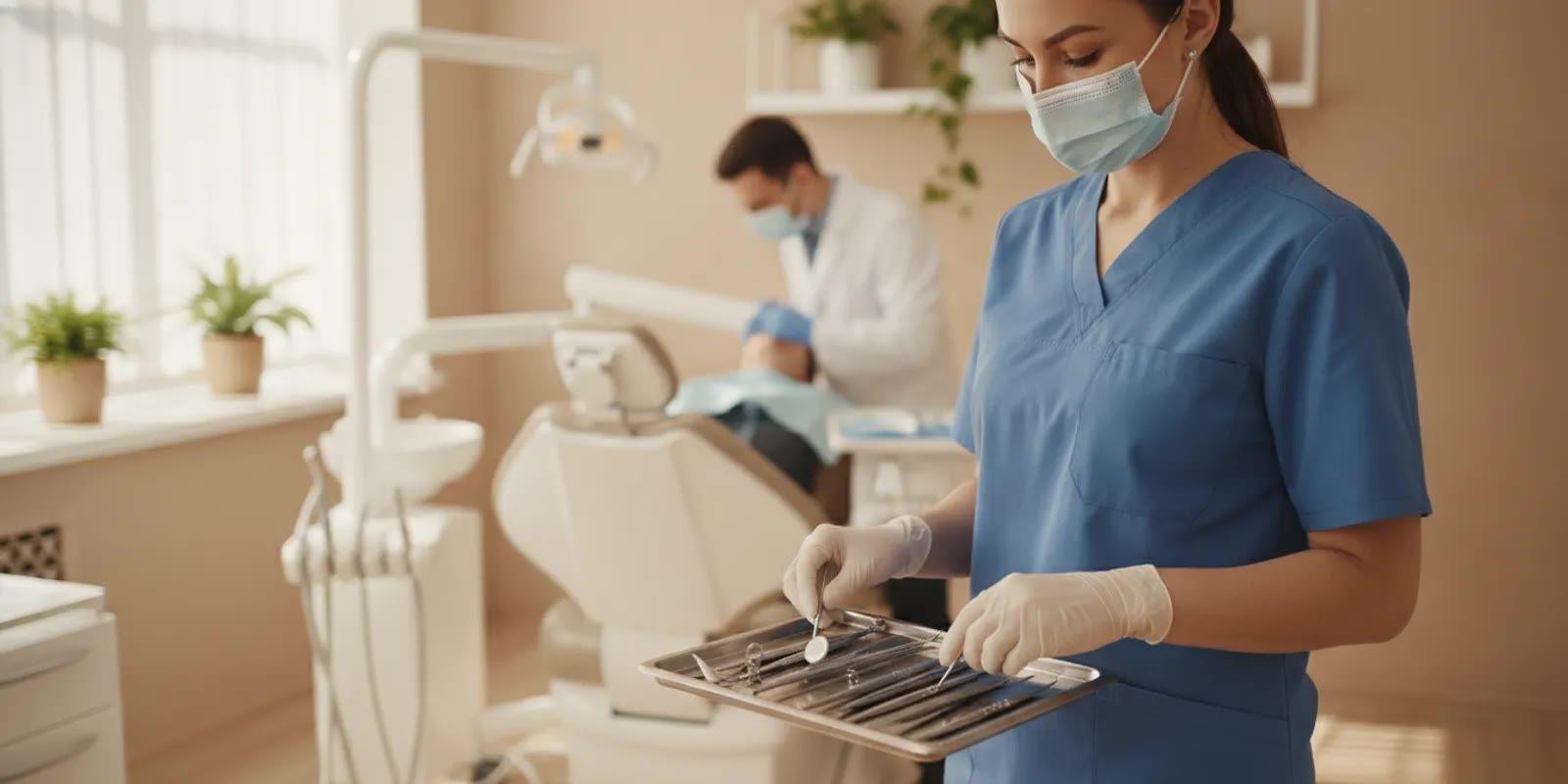
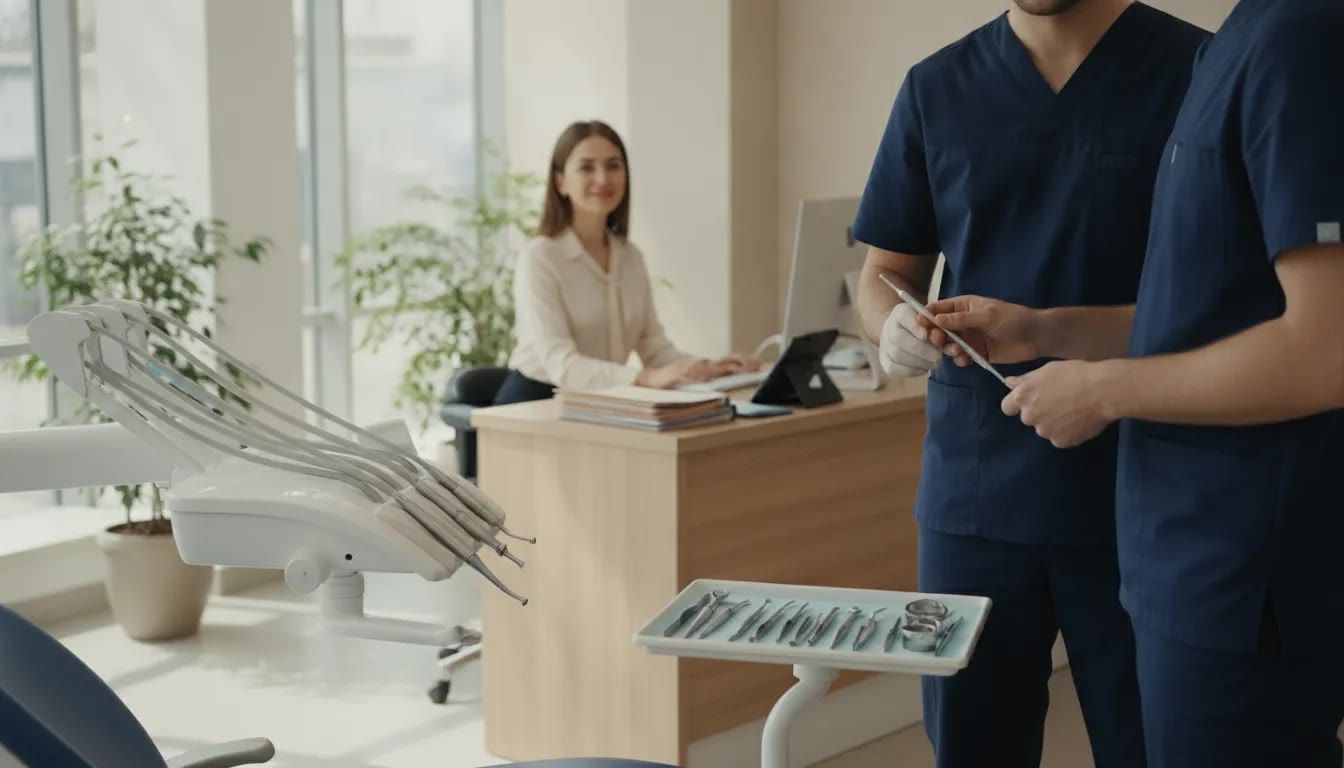
There is no single workflow that applies to every dental office. Equipment, assigned duties, training, and the dentist’s instructions can differ. Think of photography as a sequence of handoffs: a team member establishes the purpose, prepares the process, captures a requested view, and routes the resulting file according to office instructions.
- Confirm the reason for the image. Ask what the dentist wants to document or discuss. A clear purpose helps the team know which view is requested and where the image needs to go. If the request is unclear, check before setting up.
- Confirm the patient-facing process. Find out who explains the image and obtains or records any permission required by the practice. The assistant should not assume that a previous visit, a patient’s silence, or a casual conversation answers the question.
- Check the equipment and instructions. Identify the camera or device and any accessories the office uses. Ask who has been trained to prepare them and what handling steps apply. Follow the office’s directions rather than adapting a personal device or an online tutorial.
- Prepare the patient and room as directed. Use plain language to explain the immediate step, make sure the patient has an opportunity to ask a question, and follow the clinician’s direction. If the patient is uncomfortable or uncertain, pause and involve the dentist or responsible team member.
- Capture only the requested views. Follow the practice’s instruction for positioning and image capture. Do not independently decide that a view is clinically sufficient, that another image is needed, or that a photograph supports a diagnosis.
- Check and route the file. Use the office process to confirm the image is associated with the correct patient record and reaches the intended destination. Report an unclear, missing, or misfiled image to the appropriate person rather than making an unapproved change.
This is a learning framework, not a universal clinical protocol. A new assistant should receive instruction on the specific equipment, assigned responsibilities, and recordkeeping steps used by that school or employer. If a task falls outside the training provided, say so before handling an image or device.
What equipment questions should beginners ask?
Dental photography does not always mean one particular camera setup. A study summary discusses mobile cameras as well as dedicated cameras, but that does not establish which device is suitable for a specific office or image. The practical question is what equipment the school or employer uses, how it is maintained and handled, and which parts of the workflow a beginner may perform.
- What device is used? Ask whether the office uses a dedicated camera, a mobile device, or more than one option. Find out whether students use the same equipment as team members or only observe.
- Which accessories are part of the process? Ask whether the workflow includes lenses, lighting, mirrors, or retractors, and who teaches their setup and handling. Do not assume that an accessory is used in every setting.
- How are images transferred? Ask how files move from the device to the practice’s record system, who checks that transfer, and what to do if it fails. A sound capture is only useful to the team if it is routed correctly.
- What skills are taught first? Ask whether instruction covers holding and handling equipment, consistent framing, focus, lighting, patient positioning, or another defined skill. Ask how practice is supervised and how feedback is given.
- Who selects and evaluates the image? Find out who chooses the requested views, decides whether an image is adequate for its purpose, and makes clinical decisions. These are important boundaries for a new assistant to understand.
These questions are more useful than buying a camera based on a general recommendation. A device that works for one task may not match another office’s equipment, software, or procedures. Before spending money, ask whether training includes photography at all and whether the school expects students to bring any equipment. Do not infer that a course covers photography merely because it teaches other clinical subjects.
How can photography support patient communication?
Patients should know why a photograph is being taken and how the care team intends to use it. An assistant can describe the immediate process in neutral, simple language, such as, “The dentist would like an image to review this area with you.” The assistant should not speculate about what the image means, suggest a treatment, or promise what the clinician will conclude.
Give the patient time to respond. If someone asks why a picture is needed, seems hesitant, or asks whether an image will be shared, pause and refer the question to the dentist or the person responsible for the practice’s permission process. Do not rush through an explanation or treat silence as a substitute for the office’s stated procedure.
It can help to distinguish the immediate care discussion from uses beyond that discussion. A photograph taken to support a patient’s care is not automatically cleared for a class, a case presentation, a school exercise, or public-facing material. Ask who handles permission for those uses and follow the practice’s process. Do not copy a patient image to a personal device, send it through a personal account, or share it informally.
Communication also includes what happens after the image is made. Let the patient know what the next step is, if the dentist has provided that explanation. If the patient asks a clinical question, refer it to the clinician instead of trying to interpret the photograph. Staying within the assigned role helps keep the conversation accurate and respectful.
What does careful recordkeeping involve?
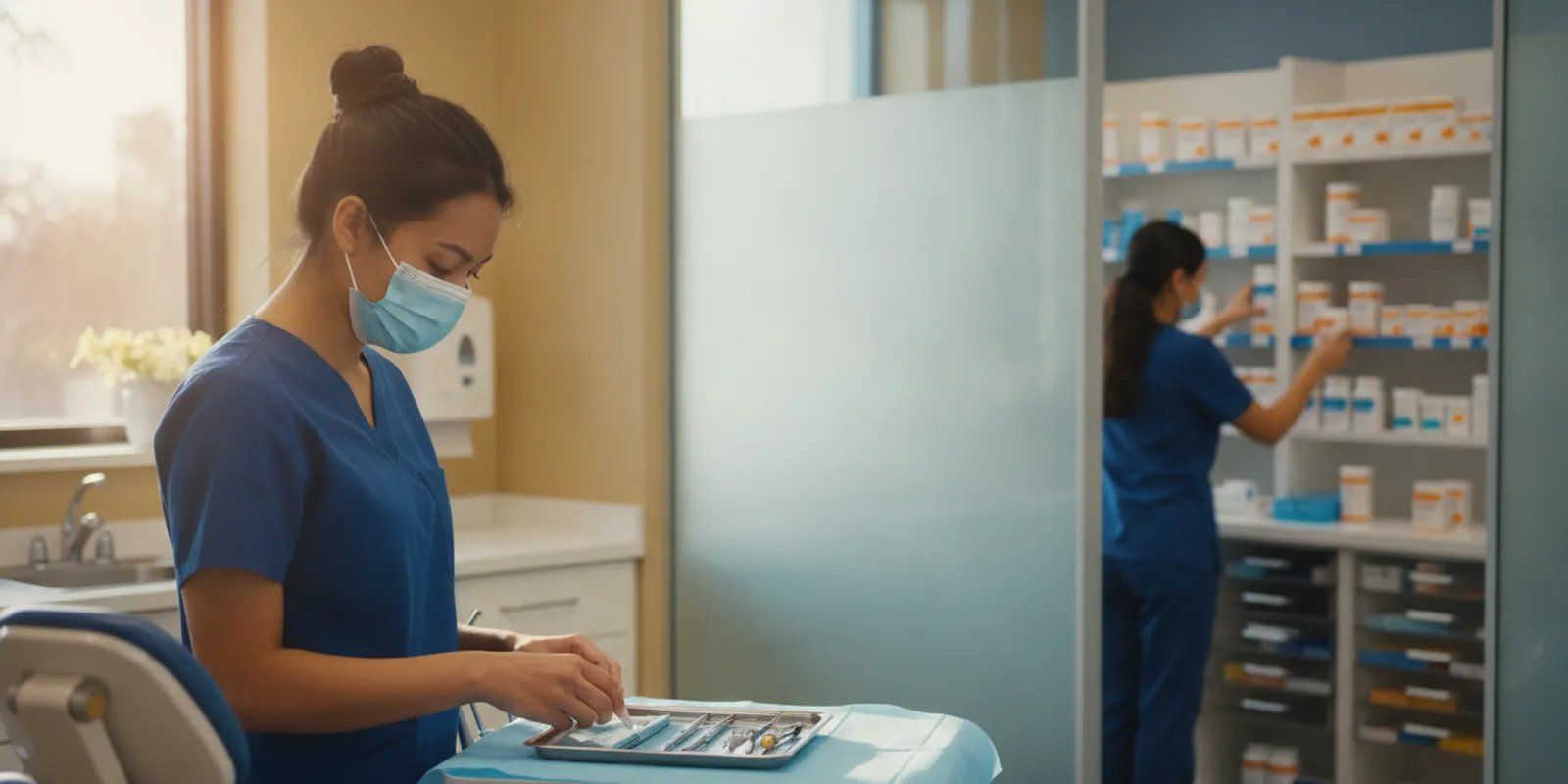
Recordkeeping begins with following the practice’s established system. Before taking or handling images, ask how the office identifies the patient, labels each image, links it to the correct record, and limits access. Learn which team member checks the file and what the assistant is expected to do. If you are not sure where an image belongs, ask rather than guessing.
Consider a simple example: an image is captured, but the transfer screen does not clearly show which record is open. The safe next move is not to choose the most likely patient or save the file to a personal location for later. Pause and ask the designated team member to confirm the correct procedure. That small handoff can help prevent confusion about where the file belongs.
Ask what to do if the wrong file is selected, a transfer fails, an image appears in an unexpected record, or a device is lost. Report a problem promptly through the office’s process. Do not quietly delete, rename, or move a file unless your training and the office’s instructions specifically direct you to do so. These steps are practice-specific, so a new assistant should not substitute assumptions for instruction.
A photograph also needs context. The dentist or designated team member determines how it relates to the rest of the record and how it is interpreted. The image itself does not authorize an assistant to add a clinical conclusion. Good organization means following the prescribed process and escalating uncertainty, not making independent decisions about what the image proves.
How can you ask whether a training program teaches photography?
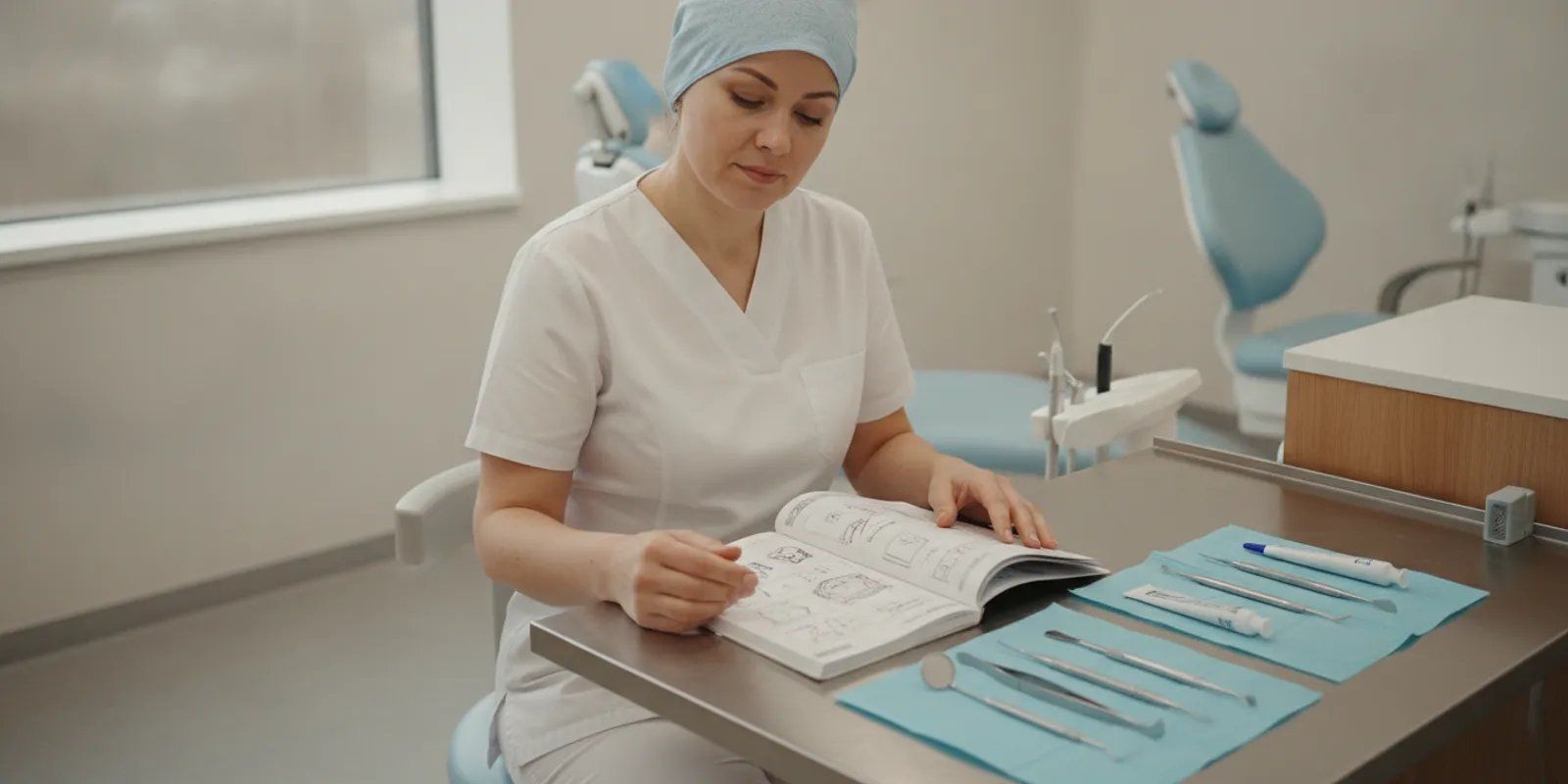
Course descriptions may mention radiography, charting, or hands-on dental practice without specifying dental photography. These are distinct topics. Ask for a direct answer instead of assuming that one includes the other. Before enrolling, consider writing down your questions and asking admissions to identify which are covered in class, which are observed, and which are not part of the training.
- Does instruction include dental photography, or does the course focus on radiography and other clinical skills?
- Will learners see how a team prepares, captures, labels, and stores images, or is the topic not covered?
- Is practice performed with training equipment, in a dental-office setting, or both?
- Who supervises the activity, and what tasks are learners expected to perform?
- Does instruction address patient communication and the school’s or employer’s process for image permission?
- What equipment and software will students encounter, and which parts of the workflow remain outside the course?
- How can a student ask for help if an image, device, or recordkeeping step is unfamiliar?
Alliance Dental Institute describes an in-person, dentist-mentored dental assistant training program with classroom instruction, practical dental-office learning, and a 40-hour externship. Its published topic list includes chairside assisting, radiography, sterilization, charting, emergencies, and career preparation. The available information does not specifically confirm a dental photography module. Ask admissions whether photography instruction is included, and what a learner would actually do, rather than assuming it is part of the course because related subjects are taught.
For context about the school’s published program information, you can review the school’s blog and ask admissions about a specific subject not addressed in the material. You can also browse the school’s other training articles for related questions. The program is in person at the Villa Rica campus. Admissions hours and tour availability are not the same as class hours, so ask separately about the current timetable and the format of any practical learning.
When comparing answers, listen for details rather than a simple yes or no. A useful answer should make clear whether learners only hear about photography, watch a demonstration, or get supervised practice with a defined workflow. Ask whether that workflow covers image purpose, patient communication, equipment handling, file labeling, and record routing. If the person you speak with is unsure, ask who can confirm the curriculum; do not treat a guess as a course promise.
How should you prepare for a first photography task?
Before assisting, confirm who is directing the task and what you are trained and authorized to do. Review the office’s instructions, identify the equipment you will use, and check the patient communication and recordkeeping steps. A short pre-task check can prevent avoidable uncertainty:
- Can I explain the purpose of this image in plain language, without interpreting it?
- Do I know who is responsible for the patient’s questions and the permission process?
- Have I been shown how to prepare and handle this equipment?
- Do I know which images have been requested and who will evaluate them?
- Can I describe how the file is labeled, transferred, and checked?
- Do I know whom to ask if the patient is uncomfortable or a step does not go as planned?
If an answer is no, ask for guidance before proceeding. This is not a test of confidence; it is a practical way to know where supervision is needed. A new assistant should be able to raise a question without pretending to know an unfamiliar device or process.
Afterward, ask for feedback on the workflow. Was the requested view captured under the direction given? Was the file routed as instructed? Did the patient have a chance to ask questions? Feedback on these steps helps a beginner learn the process while leaving clinical evaluation to the dentist.
Call to discuss your training questions
Frequently asked questions
Does every dental assistant take dental photographs?
No single workflow applies to every office. Duties depend on the employer’s process, the assistant’s training, and the dentist’s direction. Ask about expectations before performing a photography task.
Is dental photography the same as dental radiography?
No. Photography creates images with a camera, while radiography uses X-ray equipment. They are different subjects and should not be treated as interchangeable in a course description or workplace discussion.
Can an assistant explain what a photograph shows?
An assistant can help the patient understand why an image is being taken and what the next step is, if the clinician has explained it. The dentist interprets the image and answers clinical questions.
Should a student buy a camera before training?
Ask the school what equipment, if any, students use before buying anything. Training equipment and office systems may differ, and a generic recommendation may not fit the learning environment.
What if a course description does not mention photography?
Ask admissions whether dental photography is included and request specifics about instruction, practice, supervision, and image handling. Do not assume that radiography or general hands-on training covers photography.
Dental photography is easiest for a beginner to understand when its purpose, patient communication, supervision, and recordkeeping are clear. Ask direct questions about the workflow, and follow the school’s or employer’s instructions at each step.